
Skip to content
Scan a barcode
Scan
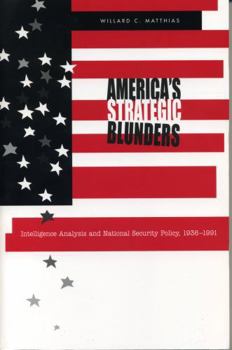
Hardcover America's Strategic Blunders: Intelligence Analysis and National Security Policy, 1936-1991 Book

ISBN: 0271020660

ISBN13: 9780271020662

America's Strategic Blunders: Intelligence Analysis and National Security Policy, 1936-1991

Select Format

Select Condition ThriftBooks Help Icon

Recommended

Format: Hardcover

Condition: Very Good

$26.49
Save $30.46!
List Price $56.95
Almost Gone, Only 1 Left!

Book Overview

This survey of more than fifty years of national security policy juxtaposes declassified U. S. national intelligence estimates with recently released Soviet documents disclosing the views of Soviet leaders and their Communist allies on the same events. Matthias shows that U. S. intelligence estimates were usually correct but that our political and military leaders generally ignored them--with sometimes disastrous results. The book begins with a look back at the role of U. S. intelligence during World War II, from Pearl Harbor through the plot against Hitler and the D-day invasion to the "unconditional surrender" of Japan, and reveals how better use of the intelligence available could have saved many lives and shortened the war. The following chapters dealing with the Cold War disclose what information and advice U. S. intelligence analysts passed on to policy makers, and also what sometimes bitter policy debates occurred within the Communist camp, concerning Vietnam, the Bay of Pigs, the Cuban missile crisis, the turmoil in Eastern Europe, the Six-Day and Yom Kippur wars in the Middle East, and the Soviet intervention in Afghanistan. In many ways, this is a story of missed opportunities the U. S. government had to conduct a more responsible foreign policy that could have avoided large losses of life and massive expenditures on arms buildups.

While not exonerating the CIA for its own mistakes, Matthias casts new light on the contributions that objective intelligence analysis did make during the Cold War and speculates on what might have happened if that analysis and advice had been heeded.

Customer Reviews

2 ratings

OUTSTANDING

THIS IS PROBABLY THE BEST BOOK ON THE WAY INTELLIGECE IS IGNORED IN MAKING KEY POLICIES. MATTHIAS WAS HIGH IN THE CIA AND PRIVY TO MUCH INFORMATION. I KNOW OF NO BETTER ACCOUNT THAN THIS, AND I HAVE READ MANY.

Solid Thinking on Disconnects Between Policy & Intelligence

I like and recommend this book because it is an important personal account from a very talented senior intelligence estimates professional. It documents in great detail a number of extremely serious mistakes on the part of U.S. policy makers from World War II through to Reagan years, while also recounting the history of how the Pentagon helped destroy CIA's independent assessments capability. Time and time again throughout this book one sees references to "state of mind" and "mindset", and this is important. The author has a very fine grasp of how debilitating ingrained mindsets can be--the military mindset that focuses on buying more and more high technology even though it is demonstrably irrelevant to our most urgent strategic needs; the policy mindset that emphasizes the need for a tangible "main enemy" even as we destroy the environment and ignore catastrophic diseases and failed states; and the intelligence mindset that values secrecy and blind loyalty over public disclosure and public service. I am especially impressed by the author's past responsibility for preparing the "Estimate of the World Situation", and how compellingly he distinguishes between the great days when such estimates were both produced and consumed, and today's state of affairs, where only "hard targets" are the object of our obsession, and "rest of the world" is poorly addressed. The integrity of intelligence is a theme than runs throughout the book, and for that reason alone I recommend it for every policy and intelligence professionals' library. There are also compelling insights and thoughtful quotes. The author's itemization of seven structural anomalies and states of mind that were present in World War II and can be seen today is worth abstracting here: 1. Absolute commitment to unconditional surrender eliiminated possibilities for undermining Hitler from within; 2. Allied command structure was not unified in fact; 3. There were no functioning lines of communication between tactical military and tactical (field) intelligence units; 4. Military leaders had a tactical intelligence state of mind, not a strategic intelligence state of mind, and were overly dependent on signals intelligence; 5. Military leaders were absolutely committed to established plans and unwilling to deviate or consider alternatives even in the face of compelling intelligence; 6. Moral self-righteousness and political naivete blinded Allied political and military leaders to the efforts of moderating forces in Germany ready to start an internal war; 7. Concept of war shifted away from the Clausewitzian "trinity" toward a "total war" emphasizing societal destruction and victory at any cost. As his book goes on to document, these problems have been with us through the entire Cold War period, and have resulted in great waste of the taxpayer dollar as well as extraordinary risk of nuclear war with the Soviets during the 1980's when we played a very confrontational game with very limit
Copyright © 2026 Thriftbooks.com Terms of Use | Privacy Policy | Do Not Sell/Share My Personal Information | Cookie Policy | Cookie Preferences | Accessibility Statement
ThriftBooks® and the ThriftBooks® logo are registered trademarks of Thrift Books Global, LLC

GoDaddy Verified and Secured