


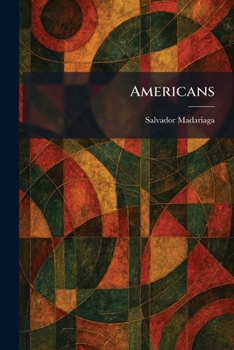
Americans

Select Format
Select Condition 
Book Overview
"I. Americans" is a thought-provoking collection of essays by the distinguished Spanish diplomat and historian Salvador de Madariaga. This work examines the evolving role of the United States in the global landscape and its relationship with the League of Nations during the crucial interwar period. Madariaga, known for his keen psychological and cultural insights, explores the distinct character of the American people and the implications of their growing political and economic influence on the world stage.
Through a series of insightful commentaries, the author bridges the gap between European and American perspectives, advocating for greater international cooperation and mutual understanding. The essays delve into themes of diplomacy, national identity, and the challenges of establishing a lasting peace in a rapidly changing world. As a reflection of the intellectual climate of the early 20th century, "I. Americans" offers contemporary readers a valuable historical perspective on the roots of modern international relations and the complexities of American isolationism versus global engagement. This volume remains an essential read for those interested in political science, diplomatic history, and the philosophical underpinnings of internationalism.
This work has been selected by scholars as being culturally important, and is part of the knowledge base of civilization as we know it. This work was reproduced from the original artifact, and remains as true to the original work as possible. Therefore, you may see the original copyright references, library stamps (as most of these works have been housed in our most important libraries around the world), and other notations in the work.
This work is in the public domain in the United States of America, and possibly other nations. Within the United States, you may freely copy and distribute this work, as no entity (individual or corporate) has a copyright on the body of the work.
As a reproduction of a historical artifact, this work may contain missing or blurred pages, poor pictures, errant marks, etc. Scholars believe, and we concur, that this work is important enough to be preserved, reproduced, and made generally available to the public. We appreciate your support of the preservation process, and thank you for being an important part of keeping this knowledge alive and relevant.
Customer Reviews
ThriftBooks ® and the ThriftBooks ® logo are registered trademarks of Thrift Books Global, LLC
