


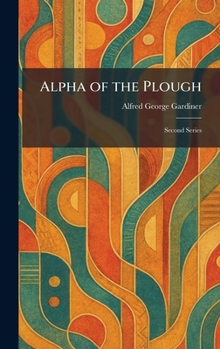
Alpha of the Plough: Second Series

Select Format
Select Condition 
Book Overview
"Alpha of the Plough: Second Series" is a masterful collection of personal essays by the celebrated British journalist and author A. G. Gardiner. Writing under his famous pseudonym, Gardiner offers readers a delightful array of reflections on the nuances of everyday life, human nature, and the changing world of the early twentieth century. These essays are characterized by their warmth, wit, and gentle wisdom, ranging from lighthearted observations on leisure and habit to deeper meditations on social ethics and the individual's place in society.
As a prominent figure in the golden age of the English essay, Gardiner's prose is marked by an elegant simplicity and an engaging conversational tone. This "Second Series" continues the tradition of his previous work, blending sharp intellectual insight with a profound appreciation for the mundane. Whether discussing the virtues of walking, the peculiarities of public behavior, or the quiet beauty of the English countryside, the author invites the reader into a world of thoughtful contemplation. This collection remains a significant contribution to British literary heritage, showcasing the enduring power of the essay as a medium for both personal expression and cultural critique.
This work has been selected by scholars as being culturally important, and is part of the knowledge base of civilization as we know it. This work was reproduced from the original artifact, and remains as true to the original work as possible. Therefore, you may see the original copyright references, library stamps (as most of these works have been housed in our most important libraries around the world), and other notations in the work.
This work is in the public domain in the United States of America, and possibly other nations. Within the United States, you may freely copy and distribute this work, as no entity (individual or corporate) has a copyright on the body of the work.
As a reproduction of a historical artifact, this work may contain missing or blurred pages, poor pictures, errant marks, etc. Scholars believe, and we concur, that this work is important enough to be preserved, reproduced, and made generally available to the public. We appreciate your support of the preservation process, and thank you for being an important part of keeping this knowledge alive and relevant.
Related Subjects
Literary Literary Criticism & Collections Literature Literature & Fiction PhilosophyCustomer Reviews
ThriftBooks ® and the ThriftBooks ® logo are registered trademarks of Thrift Books Global, LLC
