


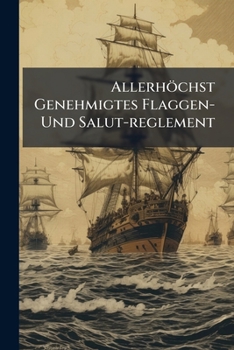
Allerhöchst Genehmigtes Flaggen- Und Salut-reglement

Select Format
Select Condition 
Book Overview
Explore the intricacies of maritime protocol with "Allerh chst Genehmigtes Flaggen- Und Salut-reglement," a historical document detailing flag usage and salutes within a specific naval context. This meticulously preserved regulation offers a glimpse into the structured world of naval operations, showcasing the importance of visual communication and ceremonial customs at sea.
This document provides invaluable insights for historians, maritime enthusiasts, and those interested in military history. Delve into the detailed rules governing flag displays and the procedures for conducting naval salutes, offering a rich understanding of the traditions and hierarchies that shaped maritime interactions. Discover the significance of each flag and salute, and appreciate the precision required in their execution. A vital resource for understanding naval practices of a bygone era, this book illuminates the complex interplay between law, tradition, and military governance on the open sea.
This work has been selected by scholars as being culturally important, and is part of the knowledge base of civilization as we know it. This work was reproduced from the original artifact, and remains as true to the original work as possible. Therefore, you will see the original copyright references, library stamps (as most of these works have been housed in our most important libraries around the world), and other notations in the work.
This work is in the public domain in the United States of America, and possibly other nations. Within the United States, you may freely copy and distribute this work, as no entity (individual or corporate) has a copyright on the body of the work.
As a reproduction of a historical artifact, this work may contain missing or blurred pages, poor pictures, errant marks, etc. Scholars believe, and we concur, that this work is important enough to be preserved, reproduced, and made generally available to the public. We appreciate your support of the preservation process, and thank you for being an important part of keeping this knowledge alive and relevant.
Customer Reviews
ThriftBooks ® and the ThriftBooks ® logo are registered trademarks of Thrift Books Global, LLC
