


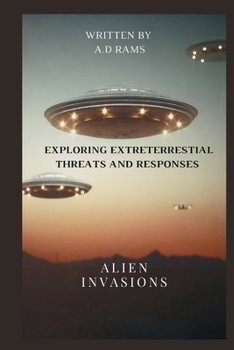
Alien Invasions: Exploring Extreterrestial Threats and Responses
No Customer Reviews

When we talk about "alien invasions," we don't mean aliens coming to Earth; rather, we mean non-native species being introduced into environments where they may cause harm. When organisms are carried beyond of their natural range often by human activity and establish colonies in unfamiliar settings, it's referred to as an alien invasion, also known as a biological invasion or the introduction of invasive species.
These alien species have the ability to severely impair biodiversity, economies, and human health in addition to outcompeting native flora and fauna and upsetting natural processes. In their new habitat, they might not have any natural competitors or predators, which would allow them to spread quickly and outcompete local species for resources.
Plants like kudzu and water hyacinth, animals like cane toads and Asian carp, and microorganisms like zebra mussels are common examples of invading species. Numerous issues, like as habitat degradation, the extinction of local species, decreased agricultural output, and the spread of diseases, can be brought on by these species.
Coordinated actions at the local, national, and international levels are necessary to manage and prevent extraterrestrial invasions. This entails actions like early identification and quick reaction to new invasions, putting laws in place to restrict the movement of potentially invasive species, evaluating the danger of introducing new species, and rehabilitating invasive species-affected habitats.
These alien species have the ability to severely impair biodiversity, economies, and human health in addition to outcompeting native flora and fauna and upsetting natural processes. In their new habitat, they might not have any natural competitors or predators, which would allow them to spread quickly and outcompete local species for resources.
Plants like kudzu and water hyacinth, animals like cane toads and Asian carp, and microorganisms like zebra mussels are common examples of invading species. Numerous issues, like as habitat degradation, the extinction of local species, decreased agricultural output, and the spread of diseases, can be brought on by these species.
Coordinated actions at the local, national, and international levels are necessary to manage and prevent extraterrestrial invasions. This entails actions like early identification and quick reaction to new invasions, putting laws in place to restrict the movement of potentially invasive species, evaluating the danger of introducing new species, and rehabilitating invasive species-affected habitats.
Format:Paperback
Language:English
ISBN13:9798321440926
Release Date:May 2024
Publisher:Independently Published
Length:54 Pages
Weight:0.19 lbs.
Dimensions:0.1" x 6.0" x 9.0"
Customer Reviews
0 rating
Copyright © 2026 Thriftbooks.com Terms of Use
| Privacy Policy | Do Not
Sell/Share My Personal Information | Cookie Policy | Cookie Preferences | Accessibility Statement
ThriftBooks® and the ThriftBooks® logo are registered trademarks of Thrift Books Global, LLC
ThriftBooks® and the ThriftBooks® logo are registered trademarks of Thrift Books Global, LLC
