


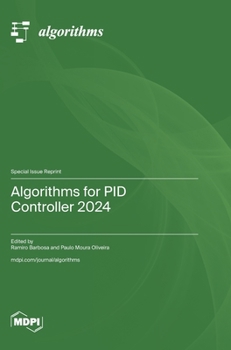
Algorithms for PID Controller 2024

To date, the PID controller is still the most commonly used algorithm for control applications. Since it was first developed, the PID algorithm has gone hand in hand with the evolution of science and engineering, and new methods and applications have been introduced over time. Advances in recent decades, provided by the area of fractional calculus and metaheuristic algorithms, and, more recently, by artificial intelligence, have given rise to a refreshing boost to PID control.
This reprint aims to present the most recent developments in the design, tuning, and applications of PID controllers. The focus is on reporting theoretical and applied research results in control structures, optimization techniques, metaheuristic algorithms, tuning methods, digital implementations, and applications of the PID algorithm, among others, and the use of current artificial intelligence techniques, such as machine learning, deep learning, and reinforcement learning.
Customer Reviews
ThriftBooks ® and the ThriftBooks ® logo are registered trademarks of Thrift Books Global, LLC
