


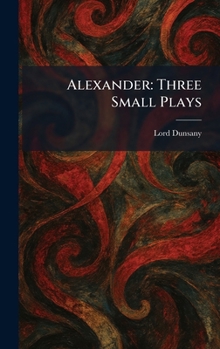
Alexander: Three Small Plays

"Alexander Three Small Plays" is a compelling collection of short dramatic works from the imaginative mind of Lord Dunsany, one of the most influential figures in early twentieth-century fantasy and Irish literature. This volume showcases Dunsany's unique ability to weave historical narratives with a sense of mythic timelessness and poetic elegance.
The titular play, Alexander, offers a brief yet profound exploration of the legendary conqueror Alexander the Great, examining the weight of his triumphs and the isolation of his immense power. Accompanied by two additional short plays, the collection demonstrates Dunsany's mastery of the "small play" format-works designed to evoke a potent atmosphere and deliver sharp philosophical insights within a concise structure.
Renowned for his influence on the development of modern fantasy, Dunsany infuses these scripts with the same lyrical prose and otherworldly charm found in his famous short stories. These plays remain significant for their stylistic innovation and their contribution to the modern dramatic repertoire, providing a fascinating glimpse into themes of destiny, ambition, and the intersection of the mortal and the divine.
This work has been selected by scholars as being culturally important, and is part of the knowledge base of civilization as we know it. This work was reproduced from the original artifact, and remains as true to the original work as possible. Therefore, you may see the original copyright references, library stamps (as most of these works have been housed in our most important libraries around the world), and other notations in the work.
This work is in the public domain in the United States of America, and possibly other nations. Within the United States, you may freely copy and distribute this work, as no entity (individual or corporate) has a copyright on the body of the work.
As a reproduction of a historical artifact, this work may contain missing or blurred pages, poor pictures, errant marks, etc. Scholars believe, and we concur, that this work is important enough to be preserved, reproduced, and made generally available to the public. We appreciate your support of the preservation process, and thank you for being an important part of keeping this knowledge alive and relevant.
Related Subjects
DramaCustomer Reviews
ThriftBooks® and the ThriftBooks® logo are registered trademarks of Thrift Books Global, LLC
