


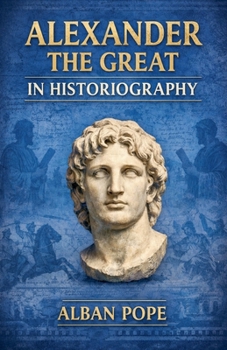
Alexander the Great in Historiography

Few figures in world history have generated such a vast, contradictory, and enduring body of interpretation as Alexander III of Macedon. From the moment of his death in Babylon in 323 BCE, the struggle to define who he was-and what his astonishing career meant-began in earnest. That struggle has never ceased. Across more than two millennia, Alexander has been celebrated as a heroic conqueror, condemned as a murderous tyrant, admired as a military genius, and transformed into a mythic wanderer whose exploits transcend the boundaries of history. Each age has fashioned its own Alexander, shaped by its anxieties, ambitions, and intellectual frameworks. The result is not a single coherent tradition but a palimpsest of competing narratives, each claiming authority while revealing more about its creators than about the man at its center.
Related Subjects
HistoryCustomer Reviews
ThriftBooks ® and the ThriftBooks ® logo are registered trademarks of Thrift Books Global, LLC
