


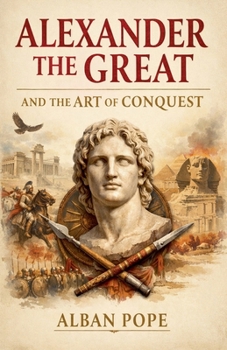
Alexander the Great and the Art of Conquest

To write about Alexander the Great is to enter a landscape where history and legend have been intertwined for more than two millennia, each generation reshaping him to suit its own anxieties, ambitions, and ideals. He is remembered as the young king who carved an empire from the Balkans to the Indus, the commander whose tactical brilliance still animates military academies, the visionary who founded cities and spread Greek culture across continents, and the tyrant whose ambition left a trail of devastation. He is all of these things and none of them, because the Alexander we inherit is always refracted through the lenses of those who wrote about him-ancient historians with their own agendas, later empires seeking legitimacy, and modern scholars wrestling with fragmentary evidence. This book begins from the premise that to understand Alexander is to understand the art of conquest itself: not merely the mechanics of battle, but the political, cultural, psychological, and symbolic dimensions that made his achievements possible and shaped their enduring legacy.
Conquest, in Alexander's world, was not simply the seizure of territory. It was a performance of power, a negotiation of identities, and a reordering of the world's moral and political geography. The Macedonian king did not merely defeat armies; he reshaped the meaning of kingship, empire, and cultural exchange. His campaigns were at once acts of violence and acts of imagination. They required not only military innovation but also the ability to persuade, intimidate, and inspire. The art of conquest, as Alexander practiced it, was a complex interplay of strategy, charisma, ritual, and mythmaking. It is this interplay that the chapters ahead seek to unravel.
Related Subjects
HistoryCustomer Reviews
ThriftBooks ® and the ThriftBooks ® logo are registered trademarks of Thrift Books Global, LLC
