


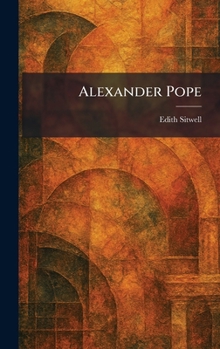
Alexander Pope

"Alexander Pope" is an evocative and sympathetic biography of one of England's greatest satirists and poets, written by the distinguished author Edith Sitwell. Through a blend of meticulous research and poetic sensibility, Sitwell explores the life and genius of the man behind "The Rape of the Lock" and "An Essay on Man," defending his reputation against historical criticism. The work provides a vivid portrait of the Augustan age, capturing the intellectual fervor and the biting social rivalries of the 18th-century London literary scene.
Sitwell focuses not only on Pope's formidable literary output but also on the physical and emotional challenges he faced, particularly the health struggles that shaped his character and his art. By examining his friendships, his legendary feuds with contemporaries, and his profound influence on English letters, this study offers a nuanced perspective on Pope's craftsmanship and his dedication to the perfection of the heroic couplet. This volume remains a significant work for those interested in the history of English poetry, the complexities of the Enlightenment era, and the intersection of personal resilience and artistic triumph.
This work has been selected by scholars as being culturally important, and is part of the knowledge base of civilization as we know it. This work was reproduced from the original artifact, and remains as true to the original work as possible. Therefore, you may see the original copyright references, library stamps (as most of these works have been housed in our most important libraries around the world), and other notations in the work.
This work is in the public domain in the United States of America, and possibly other nations. Within the United States, you may freely copy and distribute this work, as no entity (individual or corporate) has a copyright on the body of the work.
As a reproduction of a historical artifact, this work may contain missing or blurred pages, poor pictures, errant marks, etc. Scholars believe, and we concur, that this work is important enough to be preserved, reproduced, and made generally available to the public. We appreciate your support of the preservation process, and thank you for being an important part of keeping this knowledge alive and relevant.
Customer Reviews
ThriftBooks® and the ThriftBooks® logo are registered trademarks of Thrift Books Global, LLC
