


Alas
No Customer Reviews

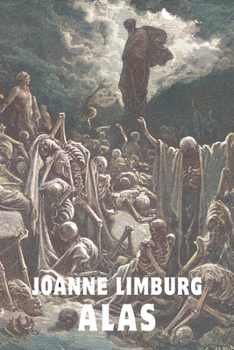
Alas is a tour-de-force of writing and imagination, called into being by the discovery of a group of bones in a long-buried well in Norwich, England, evidence of a pogrom inflicted on the town's Jewish population in medieval times. Joanne Limburg imagines the bones calling her to tell their stories, prompting her to explore the complex relationship between her ancestral past and her lived present. This takes her across time, from contemporary Britain back to the Europe of the Crusades and forward to the 1905 Aliens Act; across borders, from the birthplace of one grandmother in Ukraine to the other's in Norwich, from the Pale of Settlement to the Port of Grimsby, and from Babylon to Bethnal Green in London. The scale of the enquiry is also constantly shifting, taking in both the microscopic barleytwists of a genome and the nightmarish cycles of history which have come to shape them.
Using the acrostic form of the Hebrew Book of Lamentations as a twenty-two-line template, Limburg brings her own voice into dialogue with two very different choruses, one made up of collaged lines taken from texts by gentiles on Jews, and the other imagined as the collective voice of the Bones, who understand that mourning should always come with self-examination, and that any given distance 'must be measured before it can be felt'.
Format:Paperback
Language:English
ISBN:1780378068
ISBN13:9781780378060
Release Date:May 2027
Publisher:Bloodaxe Books
Length:128 Pages
Related Subjects
PoetryCustomer Reviews
0 rating
Copyright © 2026 Thriftbooks.com
Terms of Use | Privacy Policy | Do Not Sell/Share My Personal Information | Cookie Notice | Cookie Preferences | Accessibility Statement
ThriftBooks ® and the ThriftBooks ® logo are registered trademarks of Thrift Books Global, LLC
ThriftBooks ® and the ThriftBooks ® logo are registered trademarks of Thrift Books Global, LLC
