


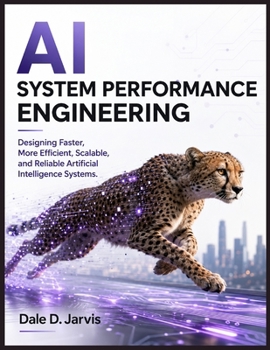
AI System Performance Engineering: Designing Faster, More Efficient, Scalable, and Reliable Artificial Intelligence Systems

AI systems are only as valuable as their ability to perform reliably, efficiently, and at scale.
Why does an AI application become painfully slow under real-world workloads? How can you reduce inference latency without sacrificing model quality? And what does it take to build AI infrastructure that remains fast, stable, and cost-effective as demand grows?
AI System Performance Engineering provides a practical framework for understanding and improving the performance of modern AI systems-from model inference and GPU workloads to distributed architectures, serving infrastructure, observability, and optimization.
Inside, readers will discover how to:
Identify and eliminate AI system performance bottlenecksOptimize inference latency, throughput, and resource utilizationImprove GPU, CPU, memory, and storage efficiencyDesign scalable AI serving architecturesEvaluate performance using meaningful benchmarks and metricsReduce infrastructure and inference costsApply caching, batching, quantization, and workload optimization techniquesBuild monitoring and observability strategies for AI systemsBalance performance, reliability, scalability, and model qualityWhether you are an AI engineer, ML engineer, software developer, cloud engineer, systems architect, or technical leader, this book offers a practical foundation for engineering AI systems that perform under demanding workloads.
Stop guessing where your AI system is slowing down. Start engineering it for measurable performance.
Get your copy of AI System Performance Engineering today and build the skills needed to design faster, more scalable, reliable, and cost-efficient AI systems.
Customer Reviews
ThriftBooks ® and the ThriftBooks ® logo are registered trademarks of Thrift Books Global, LLC
