


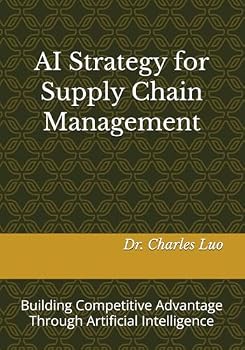
AI Strategy for Supply Chain Management: Building Competitive Advantage Through Artificial Intelligence (The AI-Driven Supply Chain: Strategy, Stories, and Systems)

Why This Book Exists
The artificial intelligence revolution in supply chain management presents a complex paradox: simultaneous overestimation of immediate capabilities and underestimation of long-term strategic implications. This creates a fundamental disconnect between AI's genuine potential and current organizational approaches to adoption.
Supply chain leaders confront competing pressures: competitive necessity to integrate AI capabilities alongside limited frameworks for systematic evaluation of technology investments with industry-wide implications.
The Strategy Gap
Contemporary AI adoption patterns fall into three categories, each with distinct limitations. Technology-first implementations prioritize algorithmic sophistication without connecting to strategic objectives, often achieving technical benchmarks while delivering limited business value. Efficiency-focused approaches treat AI as cost reduction methodology, potentially overlooking broader competitive positioning opportunities. Reactive adoption responds to external pressures without systematic assessment of strategic alignment.
These patterns reflect the absence of established analytical frameworks for AI strategy development. Unlike previous technology transitions where evaluation methods evolved gradually, AI's rapid advancement and diverse applications exceed traditional assessment capabilities.
Analytical Framework Integration
This analysis integrates three foundational elements: technological assessment that distinguishes capabilities from claims, historical pattern recognition applied to AI adoption challenges, and economic theory connecting AI investments to competitive advantage creation.
Strategic Analysis: Positions AI within established competitive strategy and organizational transformation frameworks. Applies analytical tools adapted for AI's characteristics to evaluate strategic opportunities systematically.
Historical Context: Examines five decades of supply chain technology evolution to position AI within broader technological progression. Identifies recurring patterns in implementation success and failure across technology generations.
Economic Foundations: Applies transaction cost economics, resource-based theory, and platform competition frameworks to identify AI applications with potential for sustainable competitive positioning rather than operational improvement alone.
Implementation Considerations
The timeframe for AI competitive advantage development appears compressed relative to previous technology cycles. Historical 10-15 year adoption periods may contract to 2-3 years for AI capabilities, suggesting accelerated competitive dynamics.
Organizations achieving sustained AI advantages will likely combine technological capabilities with systematic strategy development, established implementation methodologies, and deliberate competitive advantage construction rather than relying on technological sophistication or investment scale alone.
Organizational AI outcomes depend primarily on strategic evaluation frameworks rather than specific technology selections. These frameworks determine opportunity assessment, investment sequencing, and advantage development approaches.
Customer Reviews
ThriftBooks ® and the ThriftBooks ® logo are registered trademarks of Thrift Books Global, LLC
