


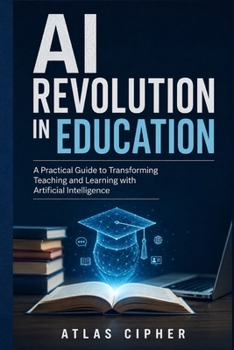
AI Revolution in Education: A Practical Guide to Transforming Teaching and Learning

Artificial intelligence has arrived in classrooms faster than most schools have been able to plan for it, arriving in two competing stories: a tool that will personalize learning for every child, or a technology that quietly undermines how children think. This book sets both stories aside in favor of a third: a clear, evidence-based account of what AI can actually do in education, where it falls short, and what it takes to use it responsibly.
Drawing on peer-reviewed research, government data, and specific classroom platforms, the book covers personalized and adaptive learning, AI tools for lesson planning and grading, rethinking assessment beyond standardized testing, engagement and the risk of over-reliance, and the ethical questions around bias, privacy, and equity that come with any new classroom technology. A final chapter offers a practical roadmap for schools and individual teachers considering adoption, including a readiness audit, a tool evaluation framework, and guidance for preparing students as well as staff.
Written for teachers, school and district leaders, and parents trying to understand what is actually happening in their child's classroom, this book treats its readers as capable of handling real evidence and real uncertainty rather than a simplified verdict. Each chapter pairs specific research and documented examples with concrete, usable guidance, so that the ideas in these pages can be applied the next day, not just discussed.
Customer Reviews
ThriftBooks ® and the ThriftBooks ® logo are registered trademarks of Thrift Books Global, LLC
