


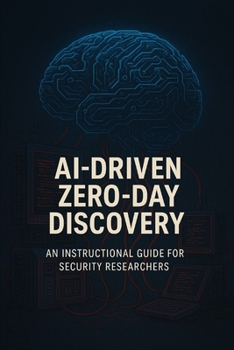
AI-Driven Zero-Day Vulnerability Discovery: An Instructional Guide for Cybersecurity Researchers

"AI-Driven Zero-Day Vulnerability Discovery: An Instructional Guide for Security Researchers" explores how machine learning can revolutionize the hunt for hidden software threats. Opening chapters clarify what makes zero-day vulnerabilities so feared and pricey, from rapid attacks to long patch delays. Against that backdrop, the book shows how AI can analyze code commits, bug trackers, and public advisories to uncover security flaws that classic tools overlook.
Practical examples reveal how Random Forests, neural networks, and NLP models classify risky commits or track suspicious dependency changes, helping predict when and where zero-days might lurk. Through Python snippets, readers learn to scrape repository data, extract features, and feed them into ML pipelines. This step-by-step approach emphasizes everything from data wrangling to training set construction, ensuring the AI flags not only known bug patterns but novel anomalies as well.
Central to this guide is blending AI with established practices like fuzzing: once ML highlights a suspect function, targeted fuzzing can confirm memory issues or logic bugs. That validation loop guards against false positives, while reinforcing how a hybrid of automated and human insight catches vulnerabilities faster. Alongside code analysis, the text demonstrates how NLP-driven threat intelligence-from scanning commit messages or dark-web chatter-can reveal early signs of exploitable weaknesses before they're public.
Importantly, the book candidly addresses AI's limits. It warns that machine learning can overfit to past vulnerability data or overlook intricate logic flaws. Thus, human expertise remains essential, especially when triaging complex, high-impact findings. Key sections detail lab workflows and tool integration, equipping security professionals to build or extend an internal AI-powered scanning pipeline.
Throughout, ethical and legal dimensions are woven in, from responsibly disclosing uncovered zero-days to ensuring that automated analysis complies with regulations like CFAA. Readers are alerted that attackers, too, may wield AI-escalating a defensive race for which proactive, data-driven methods are increasingly indispensable. Real-world case studies-from corporate R&D labs to open-source projects-exemplify the successes and pitfalls of early AI-driven discoveries.
In the final analysis, "AI-Driven Zero-Day Vulnerability Discovery" teaches researchers to operate at scale, unearthing subtle clues that manual reviews or legacy tools might miss. By bridging theoretical ML concepts with cybersecurity practicalities, it portrays AI not as a panacea but as a potent force multiplier. Those prepared to adopt these new approaches gain the upper hand in a world where critical zero-days emerge constantly, and fast, intelligent detection is everything.
Customer Reviews
ThriftBooks ® and the ThriftBooks ® logo are registered trademarks of Thrift Books Global, LLC
