


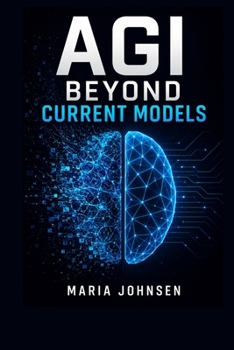
Agi: Beyond Current Models

What if today's AI revolution is leading us in the wrong direction?
While Large Language Models and generative AI systems continue to amaze the world, a deeper question remains unanswered:
Are these systems truly intelligent or are we mistaking statistical prediction for understanding?
In AGI Beyond Current Models, readers are taken on a thought-provoking journey through the promises, illusions, breakthroughs, and limitations shaping the modern pursuit of Artificial General Intelligence.
Spanning 41 chapters, this book explores the critical divide between today's narrow AI systems and the broader, human-like intelligence researchers hope to achieve.
Inside the BookYou'll discover:
Why current AI models may be fundamentally limited despite rapid progressThe difference between prediction, reasoning, understanding, and true intelligenceWhy scaling neural networks alone may not lead to AGIThe hidden problems of hallucinations, brittleness, and lack of causalityThe importance of embodiment, memory, agency, planning, and common sense reasoningHow human cognition may offer clues for building more robust intelligent systemsWhy ethics, alignment, and societal impact cannot be separated from AGI developmentEmerging alternatives and hybrid approaches that may move AI beyond today's architecturesThe book also examines the broader implications of AGI, including:
economic disruption, energy consumption, explainability, existential risk, human-AGI collaboration, and the future relationship between humanity and intelligent machines.A Critical Examination of the Current AI LandscapeThis work analyzes the ambitions and technical realities behind major AI efforts, including:
OpenAIGoogleMetaRather than offering hype or fear-driven speculation, the book provides a grounded, analytical perspective on where AI stands today and what may still be missing on the path toward genuine AGI.
Who This Book Is ForWhether you are:
an AI researcher, engineer, student, policymaker, technology leader, or simply curious about the future of intelligence,this book offers a rigorous yet accessible exploration of one of the most important technological questions of our time.
The future of intelligence is too important to approach blindly.
Customer Reviews
ThriftBooks ® and the ThriftBooks ® logo are registered trademarks of Thrift Books Global, LLC
