


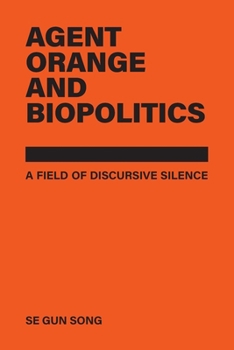
Agent Orange and Biopolitics: A Field of Discursive Silence

The legacy of Agent Orange remains one of the most enduring and contested consequences of the Vietnam War. Decades after the end of the conflict, the long-term effects of dioxin exposure continue to shape the lives of Vietnamese, yet the political, scientific, and humanitarian narratives surrounding the issue remain deeply fragmented.
This book examines how the suffering of Agent Orange victims in Vietnam has been interpreted, represented, and managed within different forms of public discourse. Drawing on historical records, media coverage, policy debates, and first-hand testimonies, it explores how scientific uncertainty, political constraints, and humanitarian framing have shaped the way the issue is understood both domestically and internationally.
Through the analytical lens of biopolitics, the study investigates the broader political and social dynamics through which the symbolic apparatus of the state and other institutions shapes whose voices are heard and whose experiences remain marginalised. Particular attention is given to the ways victims' narratives are mediated by state institutions, international actors, and humanitarian organisations.
By analysing the tensions between recognition, responsibility, and reconciliation, the book offers a critical perspective on the enduring legacy of Agent Orange and the challenges of addressing historical injustice in contemporary Vietnam.
Customer Reviews
ThriftBooks ® and the ThriftBooks ® logo are registered trademarks of Thrift Books Global, LLC
