


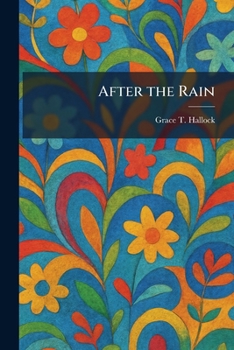
After the Rain

Select Format
Select Condition 
Book Overview
"After the Rain" is an engaging educational work that explores the vital importance of cleanliness and hygiene through a global lens. Written by Grace T. Hallock, the book takes readers on an informative journey across various countries and cultures to illustrate how different societies maintain personal and communal health. From the bathing rituals of distant lands to the fundamental importance of fresh water and soap, the narrative emphasizes the universal necessity of sanitary practices.
The work serves as a fascinating historical example of public health advocacy, demonstrating how early 20th-century initiatives sought to instill lifelong habits of wellness and sanitation in the public. Through descriptive prose and cultural anecdotes, "After the Rain" underscores the connection between environment, personal responsibility, and overall physical health. It remains a significant contribution to the literature of hygiene education, offering timeless insights into the social importance of maintaining cleanliness and the global efforts to improve human living conditions.
This work has been selected by scholars as being culturally important, and is part of the knowledge base of civilization as we know it. This work was reproduced from the original artifact, and remains as true to the original work as possible. Therefore, you may see the original copyright references, library stamps (as most of these works have been housed in our most important libraries around the world), and other notations in the work.
This work is in the public domain in the United States of America, and possibly other nations. Within the United States, you may freely copy and distribute this work, as no entity (individual or corporate) has a copyright on the body of the work.
As a reproduction of a historical artifact, this work may contain missing or blurred pages, poor pictures, errant marks, etc. Scholars believe, and we concur, that this work is important enough to be preserved, reproduced, and made generally available to the public. We appreciate your support of the preservation process, and thank you for being an important part of keeping this knowledge alive and relevant.
Customer Reviews
ThriftBooks ® and the ThriftBooks ® logo are registered trademarks of Thrift Books Global, LLC
