


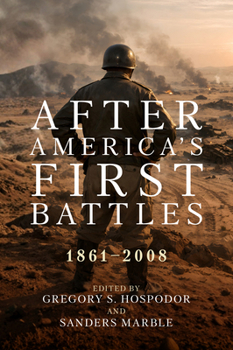
After America's First Battles: 1861-2008

After America's First Battles analyzes how the U.S. military adapts after first contact--on the battlefield and across the force--and why those adjustments determine who wins, who survives, and who doesn't.
America's first battles and their outcomes--win or lose--are well known. And all of the nation's military institutions have historically responded to the challenges wrought by the wars that followed. From tactical adjustments on the battlefield to sweeping institutional changes, Hospodor and Marble offer a comprehensive look at the dynamics of military adaptation and innovation that occurred after opening those first engagements.
Through curated case studies, the book explores conflicts spanning the American Civil War to the Global War on Terror, examining how the U.S. armed forces performed in these critical engagements. Breaking away from traditional chronological narratives, After America's First Battles provides a fresh perspective on how different branches of the military changed in response to a war's initial battle. Whether it's rapid tactical shifts or the slower, more complex evolution of higher-level strategies, the book reveals the interplay of leadership, service culture, and societal influences in shaping military success--or failure.
Drawing on the expertise of an accomplished group of scholars, After America's First Battles combines professional history with practical analysis, making it an essential resource for military professionals, historians, and anyone interested in the art and science of warfare. It aligns with the historical approach of important works like Williamson Murray's Military Adaptation in War while offering a uniquely American focus.
This book is more than a study of military change--it's a testament to the ingenuity, resilience, and adaptability of the American armed forces.
Related Subjects
HistoryCustomer Reviews
ThriftBooks® and the ThriftBooks® logo are registered trademarks of Thrift Books Global, LLC
