


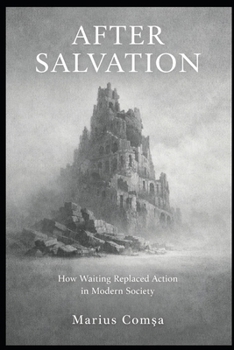
After Salvation: How Waiting Replaced Action in Modern Society

What if the greatest force shaping modern society is not fear-but waiting?
In an age saturated with information, awareness, and moral discourse, action has quietly receded. We speak endlessly about change, justice, and progress-yet the present remains strangely untouched.
After Salvation explores how modern societies drift into passivity not through repression, but through a powerful combination of exhaustion, promise, and guilt.
This book examines how:
constant cognitive and moral overload drains collective energy
hope is redirected toward an ever-delayed future
guilt becomes universal, permanent, and paralyzing
coordination is replaced by fragmentation
injustice is acknowledged, then normalized
power stabilizes in the absence of sustained pressure
Drawing on sociological observation and deep cultural patterns, After Salvation traces how ancient narratives of salvation, punishment, and delay have re-emerged in secular form-shaping behavior without appearing coercive.
This is not a political manifesto.
It does not offer saviors, solutions, or easy optimism.
Instead, it offers a clear diagnosis of a society that waits: informed but tired, reflective but hesitant, morally aware yet unable to act together.
Written in accessible, human language, this book speaks to anyone who has felt the quiet discomfort of postponement-the sense that patience has slowly turned into avoidance.
If nothing is coming to save us,
why are we still waiting?
After Salvation is for readers interested in sociology, cultural analysis, contemporary politics, and the invisible forces shaping collective behavior today.
Customer Reviews
ThriftBooks ® and the ThriftBooks ® logo are registered trademarks of Thrift Books Global, LLC
