


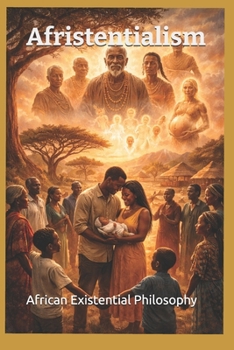
Afristentialism: African Existential Philosophy

Afristentialism is not a philosophy of crisis but a philosophy of continuity. It does not emerge from the death of God but from the living presence of the divine in all things. It does not begin with the terror of freedom but with the gift of participation. It does not confront an absurd and indifferent universe but dwells within a cosmos that is alive, meaningful, and responsive. It does not burden the individual with the impossible task of self-creation but situates the individual within a community, a lineage, and a world that provide meaning as a foundation rather than a project.
The Western existentialist tradition, for all its profundity and its genuine wrestling with the human condition, remains a philosophy of orphans-of those who have lost their cosmic home and must build shelters from the wreckage. Afristentialism is the philosophy of those who never left home, who never forgot that they belong to a world that belongs to them, who never accepted that meaning must be created because they have always known that meaning is given. It is not a counter to Western existentialism but a reminder that the crisis of meaning that produced Western existentialism was never universal-that there have always been other ways of understanding existence, other ways of being human, other ways of dwelling in the cosmos.
In a world increasingly fractured by the consequences of Western existentialism's questions-fragmented individualism, moral relativism, spiritual homelessness, ecological destruction, the exhaustion of self-creation-Afristentialism offers not a solution to be applied but a memory to be recovered. It offers the memory that meaning does not need to be created because it has never been absent. It offers the memory that we are not alone because we have never been alone. It offers the memory that existence is not a burden to be borne but a gift to be received, a participation to be embraced, a harmony to be maintained.
This is Afristentialism: not a new philosophy but the articulation of a very old one. Not a reaction to the West but an expression of Africa. Not a creation of meaning but a recognition of meaning that has always been there, waiting to be remembered.
Related Subjects
PhilosophyCustomer Reviews
ThriftBooks ® and the ThriftBooks ® logo are registered trademarks of Thrift Books Global, LLC
