


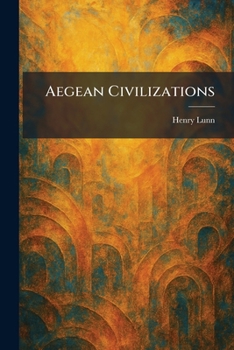
Aegean Civilizations

Select Format
Select Condition 
Book Overview
"Aegean Civilizations" offers a compelling exploration into the foundations of the ancient world, focusing on the remarkable societies that flourished around the Aegean Sea during the Bronze Age. This work provides an insightful overview of the Minoan and Mycenaean cultures, tracing their rise, influence, and eventual decline. Through a blend of historical narrative and archaeological discovery, the text examines the significance of key sites such as Knossos, Mycenae, and Troy, shedding light on the artistic, architectural, and social achievements of these early peoples.
The work masterfully connects the physical remains of these lost worlds with the myths and legends that have captivated the Western imagination for centuries. It serves as both an informative introduction and an evocative guide, taking readers through the rugged landscapes and sun-drenched islands that birthed European civilization. By highlighting the interconnectedness of trade and culture in the prehistoric Mediterranean, "Aegean Civilizations" remains a valuable resource for students of history, archaeology, and classical antiquity. This book captures the spirit of early 20th-century exploration and the enduring allure of the ancient Greek world.
This work has been selected by scholars as being culturally important, and is part of the knowledge base of civilization as we know it. This work was reproduced from the original artifact, and remains as true to the original work as possible. Therefore, you may see the original copyright references, library stamps (as most of these works have been housed in our most important libraries around the world), and other notations in the work.
This work is in the public domain in the United States of America, and possibly other nations. Within the United States, you may freely copy and distribute this work, as no entity (individual or corporate) has a copyright on the body of the work.
As a reproduction of a historical artifact, this work may contain missing or blurred pages, poor pictures, errant marks, etc. Scholars believe, and we concur, that this work is important enough to be preserved, reproduced, and made generally available to the public. We appreciate your support of the preservation process, and thank you for being an important part of keeping this knowledge alive and relevant.
Customer Reviews
ThriftBooks ® and the ThriftBooks ® logo are registered trademarks of Thrift Books Global, LLC
