


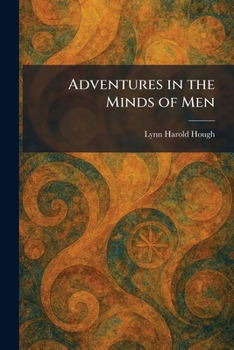
Adventures in the Minds of Men

Select Format
Select Condition 
Book Overview
"Adventures in the Minds of Men" is a profound collection of essays and reflections that delve into the intersections of theology, philosophy, and the human experience. Written by the distinguished theologian and educator Lynn Harold Hough, this work explores the vast landscapes of thought that define the modern spiritual and intellectual journey. Hough examines the core principles of Christian humanism, navigating the complexities of belief in an age of shifting philosophical currents.
The book is structured as a series of intellectual explorations, each piece offering a unique perspective on the pursuit of truth and the cultivation of a disciplined, reflective mind. Hough discusses the importance of literature, the challenges of ethical living, and the enduring relevance of religious conviction in shaping human culture. His prose is both scholarly and accessible, aimed at readers seeking a deeper understanding of how the mind grapples with the eternal questions of existence.
As a testament to early 20th-century thought, "Adventures in the Minds of Men" serves as a bridge between traditional religious values and the emerging intellectual demands of the era. It remains a valuable resource for those interested in the history of ideas, the development of American theology, and the timeless quest for wisdom in an ever-changing world.
This work has been selected by scholars as being culturally important, and is part of the knowledge base of civilization as we know it. This work was reproduced from the original artifact, and remains as true to the original work as possible. Therefore, you may see the original copyright references, library stamps (as most of these works have been housed in our most important libraries around the world), and other notations in the work.
This work is in the public domain in the United States of America, and possibly other nations. Within the United States, you may freely copy and distribute this work, as no entity (individual or corporate) has a copyright on the body of the work.
As a reproduction of a historical artifact, this work may contain missing or blurred pages, poor pictures, errant marks, etc. Scholars believe, and we concur, that this work is important enough to be preserved, reproduced, and made generally available to the public. We appreciate your support of the preservation process, and thank you for being an important part of keeping this knowledge alive and relevant.
Customer Reviews
ThriftBooks® and the ThriftBooks® logo are registered trademarks of Thrift Books Global, LLC
