


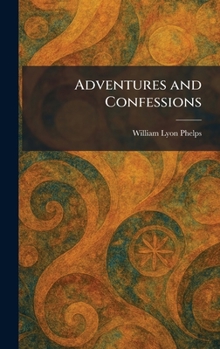
Adventures and Confessions

In "Adventures and Confessions," the esteemed literary critic and scholar William Lyon Phelps explores the profound intersections of faith, literature, and the human experience. Through a series of thoughtful and engaging essays, Phelps treats the journey of life as a grand adventure, one that requires both courage and a spiritual compass. The work serves as a personal manifesto of sorts, offering reflections on the nature of sin, the certainty of death, and the vibrant possibilities inherent in a life well-lived.
Phelps, known for his unique ability to bridge the gap between academic intellectualism and the general public, writes with a warmth and clarity that makes deep philosophical questions accessible. He discusses the role of religion in modern existence, not as a rigid dogma, but as a dynamic and vital force that provides meaning and direction. From his insights on personal morality to his observations on the societal roles of men and women, Phelps provides a compelling look at the values that shape character. "Adventures and Confessions" remains a significant work of early 20th-century American thought, inviting readers to reflect on their own beliefs and the adventurous nature of their spiritual and intellectual existence.
This work has been selected by scholars as being culturally important, and is part of the knowledge base of civilization as we know it. This work was reproduced from the original artifact, and remains as true to the original work as possible. Therefore, you may see the original copyright references, library stamps (as most of these works have been housed in our most important libraries around the world), and other notations in the work.
This work is in the public domain in the United States of America, and possibly other nations. Within the United States, you may freely copy and distribute this work, as no entity (individual or corporate) has a copyright on the body of the work.
As a reproduction of a historical artifact, this work may contain missing or blurred pages, poor pictures, errant marks, etc. Scholars believe, and we concur, that this work is important enough to be preserved, reproduced, and made generally available to the public. We appreciate your support of the preservation process, and thank you for being an important part of keeping this knowledge alive and relevant.
Customer Reviews
ThriftBooks ® and the ThriftBooks ® logo are registered trademarks of Thrift Books Global, LLC
