


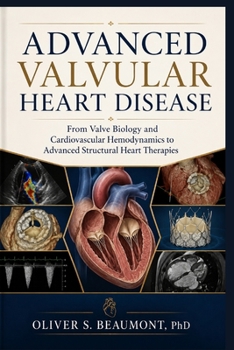
Advanced Valvular Heart Disease

Valvular Heart Disease is a comprehensive academic resource designed to provide students, healthcare professionals, and clinical practitioners with a systematic understanding of the structure, function, pathology, diagnosis, and management of heart valve disorders. Integrating fundamental cardiovascular science with contemporary clinical practice, this textbook explores the mechanisms through which valvular abnormalities affect cardiac performance, hemodynamics, and overall cardiovascular health.
The book examines the anatomy and physiology of the aortic, mitral, tricuspid, and pulmonary valves, establishing the foundation for understanding major valvular disorders, including stenosis, regurgitation, prolapse, and congenital valve abnormalities. It explores the underlying pathophysiological processes, disease progression, clinical manifestations, and complications associated with valvular dysfunction, including heart failure, arrhythmias, pulmonary hypertension, and thromboembolic events.
Particular attention is given to the clinical evaluation of patients with suspected or established valvular heart disease. Topics include history-taking, physical examination, cardiac auscultation, echocardiography, Doppler assessment, electrocardiography, cardiac computed tomography, magnetic resonance imaging, and other diagnostic approaches used to determine disease severity and guide therapeutic decisions. The text also addresses the interpretation of important clinical findings and the integration of diagnostic evidence into individualized patient assessment.
Further chapters explore contemporary approaches to medical management, surgical valve repair and replacement, transcatheter interventions, postoperative care, and long-term surveillance. The discussion considers the influence of patient characteristics, comorbidities, procedural risks, and disease severity on treatment selection. Additional emphasis is placed on multidisciplinary cardiovascular care, evidence-based decision-making, risk assessment, and the prevention and management of complications.
Suitable for medical students, cardiology trainees, cardiovascular science students, physicians, and other healthcare professionals, this textbook offers a structured framework for understanding valvular heart disease from foundational principles to advanced clinical management. By connecting cardiovascular anatomy, pathophysiology, diagnostic reasoning, and therapeutic strategies, it supports the development of the knowledge necessary to evaluate valve disorders and understand the principles underlying modern cardiovascular care.
Customer Reviews
ThriftBooks ® and the ThriftBooks ® logo are registered trademarks of Thrift Books Global, LLC
