


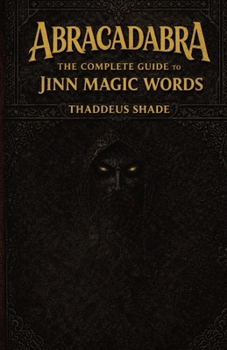
Abracadabra The Complete Guide to Jinn Magic Words

Across deserts, ancient cities, and forgotten manuscripts, there are whispers of beings made not of clay-but of smokeless fire.
In Islamic, Middle Eastern, and pre-Islamic traditions, the Jinn occupy a complex and mysterious place within spiritual cosmology. They are neither simple spirits nor mythic abstractions. They are described as conscious entities with will, societies, hierarchies, and knowledge of realms unseen by human eyes.
Abracadabra: The Complete Guide to Jinn Magic Words is a structured, in-depth exploration of the sacred words, invocations, and linguistic traditions historically associated with communicating with, protecting against, or invoking assistance from Jinn.
This book does not sensationalize folklore. Instead, it examines the cultural, historical, linguistic, and esoteric framework surrounding Jinn-related incantations and sacred speech traditions.
What This Book Explores
Throughout history, words have been treated as instruments of alignment and protection. In Jinn lore, specific phrases, divine names, and structured recitations were believed to serve distinct purposes-protection, dismissal, invocation, warding, and spiritual authority.
Inside this guide, you will discover:
The historical origins of Jinn in Middle Eastern cosmology
The theological and folkloric evolution of Jinn traditions
The role of sacred names in protective recitation
How ritual language was used in historical spiritual defense
The connection between sacred speech and spiritual authority
The structure and rhythm of traditional invocations
Protective phrases associated with warding unseen harm
The psychological and symbolic dimensions of Jinn-related language
Ethical cautions and spiritual boundaries emphasized in traditional teachings
The difference between folklore, theology, and occult reinterpretation
Words, Fire, and the Unseen
In many traditions, the spoken word is believed to carry intention into unseen realms. In Jinn cosmology, words were often treated as tools of alignment-either to seek protection from divine authority or to attempt communication through ritualized structure.
This book examines how sacred language functioned within that worldview.
It discusses:
Protective recitations rooted in monotheistic tradition
Names associated with divine sovereignty
The importance of intention and moral framework
The dangers historically attributed to careless invocation
Cultural context behind magical reinterpretations of Jinn lore
Rather than presenting fantasy, this guide treats the subject with seriousness and balance.
Who This Book Is ForThis guide is written for readers interested in:
Jinn lore and Middle Eastern spiritual traditions
Sacred words and ritual language
Protective recitations and spiritual boundaries
Islamic mysticism and folklore
Comparative occult traditions
The psychology of sacred speech
It is designed for thoughtful readers seeking understanding-not reckless experimentation.
Customer Reviews
ThriftBooks® and the ThriftBooks® logo are registered trademarks of Thrift Books Global, LLC
