


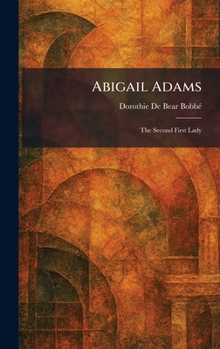
Abigail Adams: The Second First Lady

"Abigail Adams: The Second First Lady" is a comprehensive and engaging biography of one of the most influential women in American history. As the wife of the second President, John Adams, and the mother of the sixth, John Quincy Adams, Abigail Adams occupied a unique and vital position during the foundational years of the United States. This work explores her remarkable life, from her upbringing in Massachusetts to her pivotal role as a trusted advisor and intellectual partner to her husband.
The narrative delves into her sharp intellect, her unwavering commitment to the cause of independence, and her pioneering views on women's rights and education. Through a detailed examination of her extensive correspondence and personal records, the book illustrates her resilience in the face of wartime hardships and her astute observations on the political landscape of the late 18th century. "Abigail Adams: The Second First Lady" offers a vivid portrait of a woman who was much more than a political spouse; she was a foundational figure whose legacy continues to resonate. Readers will find a rich exploration of the social and political atmosphere of the Revolutionary era, seen through the eyes of a woman who helped shape the identity of a new nation.
This work has been selected by scholars as being culturally important, and is part of the knowledge base of civilization as we know it. This work was reproduced from the original artifact, and remains as true to the original work as possible. Therefore, you may see the original copyright references, library stamps (as most of these works have been housed in our most important libraries around the world), and other notations in the work.
This work is in the public domain in the United States of America, and possibly other nations. Within the United States, you may freely copy and distribute this work, as no entity (individual or corporate) has a copyright on the body of the work.
As a reproduction of a historical artifact, this work may contain missing or blurred pages, poor pictures, errant marks, etc. Scholars believe, and we concur, that this work is important enough to be preserved, reproduced, and made generally available to the public. We appreciate your support of the preservation process, and thank you for being an important part of keeping this knowledge alive and relevant.
Customer Reviews
ThriftBooks® and the ThriftBooks® logo are registered trademarks of Thrift Books Global, LLC
