


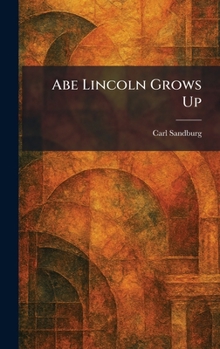
Abe Lincoln Grows Up

"Abe Lincoln Grows Up" is a vivid and evocative chronicle of the early life of one of America's most revered figures. Written by the Pulitzer Prize-winning poet and biographer Carl Sandburg, this work focuses on the first nineteen years of Abraham Lincoln's life, tracing his journey from a log cabin in Kentucky to the rugged prairies of Indiana and Illinois. The narrative provides a detailed look at the challenges of pioneer existence, emphasizing the environmental and social forces that forged Lincoln's identity long before he entered the political arena.
With the lyrical sensibility of a poet, Sandburg illustrates the daily toils and simple joys of the frontier, painting a portrait of a youth characterized by physical strength, a quick wit, and a profound love of learning. The book explores Lincoln's relationships with his family and neighbors, his self-education by firelight, and the formative experiences that instilled in him a sense of justice and humanity. "Abe Lincoln Grows Up" remains a vital piece of American literature, offering an accessible and deeply personal window into the humble beginnings of the man who would eventually lead the nation through its greatest crisis.
This work has been selected by scholars as being culturally important, and is part of the knowledge base of civilization as we know it. This work was reproduced from the original artifact, and remains as true to the original work as possible. Therefore, you may see the original copyright references, library stamps (as most of these works have been housed in our most important libraries around the world), and other notations in the work.
This work is in the public domain in the United States of America, and possibly other nations. Within the United States, you may freely copy and distribute this work, as no entity (individual or corporate) has a copyright on the body of the work.
As a reproduction of a historical artifact, this work may contain missing or blurred pages, poor pictures, errant marks, etc. Scholars believe, and we concur, that this work is important enough to be preserved, reproduced, and made generally available to the public. We appreciate your support of the preservation process, and thank you for being an important part of keeping this knowledge alive and relevant.
Customer Reviews
ThriftBooks® and the ThriftBooks® logo are registered trademarks of Thrift Books Global, LLC
