


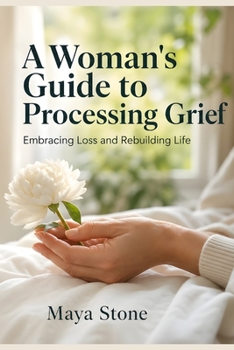
A Woman's Guide to Processing Grief: Embracing Loss and Rebuilding Life

Grief doesn't follow a schedule. And it doesn't ask for permission.
You're eleven days in, standing at your own kitchen counter, holding a mug - and you cannot work out whether you were about to fill it or had just emptied it. Nobody warned you that grief does this. That it takes your concentration, your appetite, your ability to finish a page. So on top of losing someone, you're now quietly frightened of your own mind.
Nothing is wrong with you.
A Woman's Guide to Processing Grief is a plainspoken companion for women navigating loss in all its forms. Not a recovery program. Not five tidy stages. Honest, practical company for the parts nobody prepares you for.
Inside you'll find:
What grief actually does to your body and your brain - and why the fog lifts, even when it doesn't feel like it will
The feelings nobody warned you about - the fury, the relief, the numbness, the laughing at the funeral
The losses nobody brings a casserole for - divorce, estrangement, a job of nineteen years, a mother who is still alive and no longer knows your name
Why the second year is so often harder than the first, and why that's the shape of it rather than proof you're going backward
The practical things nobody tells you - what genuinely has a deadline in the first weeks, going back to work too soon, and the money worry that arrives from nowhere around month six
Grieving while raising children who are grieving too - what they understand at each age, and the words that do damage
Three in the morning, and what to do when the nights are the worst part
The question underneath all of it - why - taken seriously, whether or not you believe in anything
Each chapter closes with one small thing to do that week. They take a few minutes. They're optional. Nothing later depends on them.
This book will not tell you that everything happens for a reason, or that you'll find a silver lining, or that you should be further along by now. It will tell you the truth: that grief changes shape rather than ending, that you are not required to let go of them in order to be well, and that the goal was never getting over it.
It was being able to carry it.
You are not doing this wrong.
Customer Reviews
ThriftBooks ® and the ThriftBooks ® logo are registered trademarks of Thrift Books Global, LLC
