


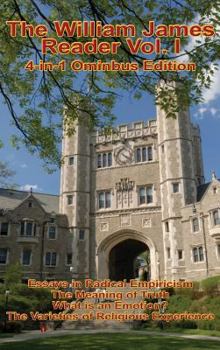
The William James Reader Vol I: Collected Philosophical and Psychological Works

Select Format
Select Condition 
Book Overview
This collected volume brings together four of William James's most influential works, presenting a sustained exploration of pragmatism, radical empiricism, psychology, and religious experience.
Included here are Essays in Radical Empiricism, The Meaning of Truth, The Varieties of Religious Experience, and the seminal essay "What Is an Emotion?" Taken together, these writings articulate James's distinctive contribution to American philosophy: a method grounded in lived experience, practical consequence, and the dynamic nature of truth.
James's pragmatism resists abstraction detached from life. In these works, he examines the structure of consciousness, the nature of belief, the validity of religious experience, and the relationship between emotion and bodily response. His thought shaped both modern psychology and twentieth-century philosophy, influencing subsequent discussions of empiricism, pluralism, and the philosophy of religion.
Presented here in a consolidated reader's volume, this edition offers sustained engagement with James's core arguments, preserving the full texts for serious study. The collection reflects the intellectual breadth of one of America's most significant philosophical voices.
Customer Reviews
ThriftBooks ® and the ThriftBooks ® logo are registered trademarks of Thrift Books Global, LLC
