


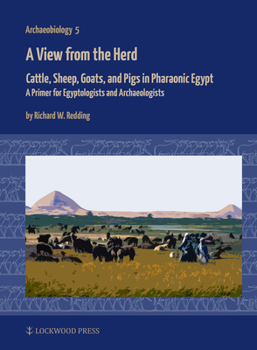
A View from the Herd: Cattle, Sheep, Goats, and Pigs in Pharaonic Egypt: A Primer for Egyptologists and Archaeologists
No Customer Reviews

In this book, the late Richard Redding synthesizes his decades-long work on the ancient agricultural economy of Egypt. Drawing on a diverse range of data, including zooarchaeology, ancient texts, and iconographic sources, he explores the role of cattle, sheep, goats, and pigs in the economic infrastructure of ancient, mainly Pharaonic, Egypt and the complexities of decision-making processes that shaped the use and management of these vital livestock resources. The book integrates zooarchaeological and historical data with information on unimproved breeds of cattle, sheep, goats, and pigs from Egypt and the broader Middle East as well as considers texts and tomb paintings. Redding argues that understanding the interplay between economic forces, environmental factors, and herders' knowledge of animal characteristics is crucial for unraveling the dynamic nature of decision-making. The author explores herd growth rates, meat yields, caloric and nutritional benefits, and optimal herd structures. By employing that data and ecological models, including the annual Nile floods, he provides insights into the adaptive strategies employed by ancient Egyptian herders. In this way, Redding examines the economic rationale behind ancient Egyptian herding communities. His models of Pharaonic herding strategies generate expectations tested using zooarchaeological evidence. Redding long advocated the modeling approach he demonstrates here, understanding zooarchaeological data through a lens of animal biology and environmental context. This work should therefore spark wide interest among archaeologists working in disparate regions.
Format:Hardcover
Language:English
ISBN:1957454083
ISBN13:9781957454085
Release Date:April 2024
Publisher:Lockwood Press
Length:210 Pages
Weight:1.85 lbs.
Dimensions:0.8" x 8.5" x 11.1"
Customer Reviews
0 rating
Copyright © 2026 Thriftbooks.com Terms of Use
| Privacy Policy | Do Not
Sell/Share My Personal Information | Cookie Policy | Cookie Preferences | Accessibility Statement
ThriftBooks® and the ThriftBooks® logo are registered trademarks of Thrift Books Global, LLC
ThriftBooks® and the ThriftBooks® logo are registered trademarks of Thrift Books Global, LLC
