


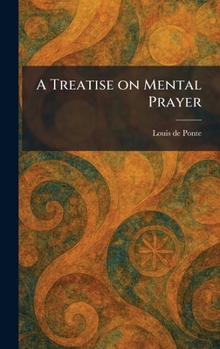
A Treatise on Mental Prayer

"A Treatise on Mental Prayer" is a profound and comprehensive guide to the practice of contemplative prayer, authored by the esteemed theologian and spiritual director Louis de Ponte. This classic work serves as a foundational text for those seeking to deepen their interior life and develop a more intimate relationship with the Divine through structured meditation and mental discourse. De Ponte meticulously outlines the various stages and methods of mental prayer, providing practical advice on how to focus the mind, engage the heart, and overcome the common distractions that arise during spiritual exercises.
Drawing from the rich tradition of Catholic mysticism and Jesuit spirituality, the treatise explores the essential elements of prayer, including the preparation of the soul, the use of the imagination in reflecting upon the life of Christ, and the ultimate goal of transforming the human will. De Ponte's approach is both theological and practical, making the heights of meditative practice accessible to the everyday believer. His insights into the nature of grace and the necessity of perseverance offer timeless wisdom for anyone pursuing a path of holiness.
This work stands as a testament to the enduring power of traditional spiritual direction, offering a clear roadmap for the practice of meditation that remains relevant for modern readers. "A Treatise on Mental Prayer" is an indispensable resource for students of theology and anyone dedicated to the cultivation of a fervent spiritual life.
This work has been selected by scholars as being culturally important, and is part of the knowledge base of civilization as we know it. This work was reproduced from the original artifact, and remains as true to the original work as possible. Therefore, you may see the original copyright references, library stamps (as most of these works have been housed in our most important libraries around the world), and other notations in the work.
This work is in the public domain in the United States of America, and possibly other nations. Within the United States, you may freely copy and distribute this work, as no entity (individual or corporate) has a copyright on the body of the work.
As a reproduction of a historical artifact, this work may contain missing or blurred pages, poor pictures, errant marks, etc. Scholars believe, and we concur, that this work is important enough to be preserved, reproduced, and made generally available to the public. We appreciate your support of the preservation process, and thank you for being an important part of keeping this knowledge alive and relevant.
Customer Reviews
ThriftBooks ® and the ThriftBooks ® logo are registered trademarks of Thrift Books Global, LLC
