


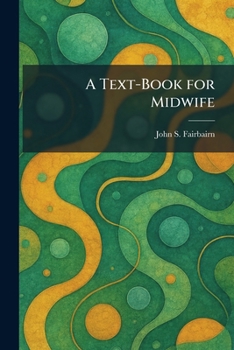
A Text-Book for Midwife

"A Text-Book for MIDWIFE" is a comprehensive and authoritative guide designed to provide essential medical knowledge to those practicing in the field of obstetrics and maternal care. Written by John S. Fairbairn, a distinguished figure in the medical community of the early 20th century, this work serves as a foundational resource for understanding the complexities of pregnancy, labor, and the postnatal period.
The text delves into the anatomical and physiological aspects of reproduction, offering clear instructions on the management of normal childbirth as well as identifying potential complications that require medical intervention. It emphasizes the importance of hygiene, patient care, and the evolving professional standards of the era. Beyond its practical applications, the book provides a fascinating look into the historical development of nursing and midwifery practices.
Students and practitioners of medical history will find this volume invaluable for its detailed observations and systematic approach to maternal health. "A Text-Book for MIDWIFE" stands as a testament to the rigorous training and dedication required in the field of midwifery, capturing a pivotal moment in the professionalization of obstetric nursing.
This work has been selected by scholars as being culturally important, and is part of the knowledge base of civilization as we know it. This work was reproduced from the original artifact, and remains as true to the original work as possible. Therefore, you may see the original copyright references, library stamps (as most of these works have been housed in our most important libraries around the world), and other notations in the work.
This work is in the public domain in the United States of America, and possibly other nations. Within the United States, you may freely copy and distribute this work, as no entity (individual or corporate) has a copyright on the body of the work.
As a reproduction of a historical artifact, this work may contain missing or blurred pages, poor pictures, errant marks, etc. Scholars believe, and we concur, that this work is important enough to be preserved, reproduced, and made generally available to the public. We appreciate your support of the preservation process, and thank you for being an important part of keeping this knowledge alive and relevant.
Customer Reviews
ThriftBooks ® and the ThriftBooks ® logo are registered trademarks of Thrift Books Global, LLC
