


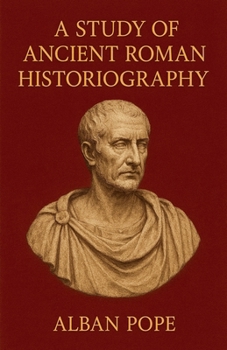
A Study of Ancient Roman Historiography

From the fall of kings to the rise of emperors, from the fires of civil war to the triumph of Christianity, the story of Rome has never stopped shaping the way we think about power, identity, and the meaning of history itself.
This book offers a sweeping, vivid journey through the evolution of Roman historical writing-from the earliest annalists to the last great chroniclers of Late Antiquity-and reveals why Roman historiography remains one of the most influential intellectual traditions in the world.
Across twenty-one richly crafted chapters, the book explores how Roman historians such as Livy, Sallust, Tacitus, and Ammianus Marcellinus transformed raw events into enduring narratives that still define Western ideas about politics, morality, and collective memory. It shows how Christian thinkers like Eusebius and Orosius reframed Rome's past through the lens of divine providence, creating new models of historical meaning that shaped medieval and early modern thought. And it traces how Renaissance humanists, Enlightenment philosophers, and modern scholars revived, reinterpreted, and sometimes challenged Roman methods-yet never escaped their gravitational pull.
Blending rigorous scholarship with compelling storytelling, the book demonstrates that Roman historiography is far more than an academic subject. It is a living tradition that continues to influence how nations craft their identities, how leaders justify their power, and how societies understand their rise, decline, and renewal. Readers will discover why Tacitus remains the master analyst of tyranny, why Livy's moral vision still resonates in debates about civic virtue, and why the Roman obsession with memory and exempla continues to shape political rhetoric today.
For anyone fascinated by Rome, by the craft of history, or by the enduring patterns of human behavior, this book offers a fresh, authoritative, and deeply engaging account of how the Romans taught the world to think historically.
Related Subjects
HistoryCustomer Reviews
ThriftBooks ® and the ThriftBooks ® logo are registered trademarks of Thrift Books Global, LLC
