


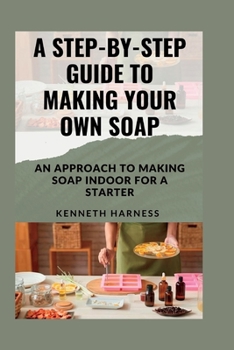
A Step-By-Step Guide to Making Your Own Soap: An Approach to Making Soap Indoor for a Starter
No Customer Reviews

Up until the early 1900s, most soaps were a handmade combination that neither looked nice nor smelled good.
It was often a combination of lye leached from wood ashes and fats remaining from animal slaughter or cooking.
Since neither component was constant from batch to batch, and the fat may or may not have been fresh, the consequence was a bar of unsightly, frequently terrible-smelling, soap that was functional, but not much more.
Making your soap should go smoother than back in the day and the product should be much more enjoyable. Soap making is a pleasant pastime that's simple to learn, provided you have excellent attention to detail and know-how to properly follow guidelines.
Once you understand how to make soap, you can begin experimenting with your unique recipes, and make them your own! Homemade soap is a great delight to create, and once you sample all-natural homemade soap I doubt you'll ever go back to store-bought. Making your own soap enables you to have total control of the process, and knowing the specific components provides you the peace of mind in this current world of chemical additions. The procedure may seem intimidating at first, but after you've created your first few batches it'll be second nature.
In actuality, learning how to create your soap is straightforward and only includes a few stages from start to end. unleash your creativity by making your own all-natural soap.
It was often a combination of lye leached from wood ashes and fats remaining from animal slaughter or cooking.
Since neither component was constant from batch to batch, and the fat may or may not have been fresh, the consequence was a bar of unsightly, frequently terrible-smelling, soap that was functional, but not much more.
Making your soap should go smoother than back in the day and the product should be much more enjoyable. Soap making is a pleasant pastime that's simple to learn, provided you have excellent attention to detail and know-how to properly follow guidelines.
Once you understand how to make soap, you can begin experimenting with your unique recipes, and make them your own! Homemade soap is a great delight to create, and once you sample all-natural homemade soap I doubt you'll ever go back to store-bought. Making your own soap enables you to have total control of the process, and knowing the specific components provides you the peace of mind in this current world of chemical additions. The procedure may seem intimidating at first, but after you've created your first few batches it'll be second nature.
In actuality, learning how to create your soap is straightforward and only includes a few stages from start to end. unleash your creativity by making your own all-natural soap.
Format:Paperback
Language:English
ISBN:B0BF2WX7FN
ISBN13:9798352442722
Release Date:January 1
Publisher:Independently Published
Length:76 Pages
Weight:0.25 lbs.
Dimensions:0.2" x 6.0" x 9.0"
Customer Reviews
0 rating
Copyright © 2025 Thriftbooks.com
Terms of Use | Privacy Policy | Do Not Sell/Share My Personal Information | Cookie Policy | Cookie Preferences | Accessibility Statement
ThriftBooks ® and the ThriftBooks ® logo are registered trademarks of Thrift Books Global, LLC
ThriftBooks ® and the ThriftBooks ® logo are registered trademarks of Thrift Books Global, LLC
