


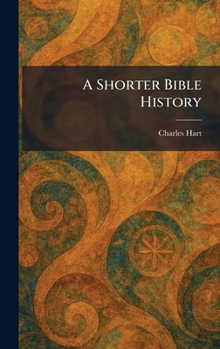
A Shorter Bible History

"A Shorter Bible History" by Rev. Charles Hart provides a concise and accessible overview of the foundational stories and historical events documented throughout the Holy Scriptures. Designed for readers seeking a clear chronological understanding of both the Old and New Testaments, this work distills complex biblical narratives into an engaging and educational format. Hart meticulously traces the lineage of faith from the creation and the era of the patriarchs through the age of the prophets, the life and ministry of Jesus Christ, and the formative years of the early Christian Church.
This work serves as an essential guide for students, teachers, and lay readers alike, emphasizing the continuity of the scriptural record and the historical context of divine revelation. By focusing on the key figures and significant turning points of sacred history, "A Shorter Bible History" offers a valuable resource for spiritual growth and academic inquiry. Its structured approach makes it particularly well-suited for instructional use, providing a comprehensive foundation in the biblical traditions that have profoundly influenced religious thought and Western culture.
This work has been selected by scholars as being culturally important, and is part of the knowledge base of civilization as we know it. This work was reproduced from the original artifact, and remains as true to the original work as possible. Therefore, you may see the original copyright references, library stamps (as most of these works have been housed in our most important libraries around the world), and other notations in the work.
This work is in the public domain in the United States of America, and possibly other nations. Within the United States, you may freely copy and distribute this work, as no entity (individual or corporate) has a copyright on the body of the work.
As a reproduction of a historical artifact, this work may contain missing or blurred pages, poor pictures, errant marks, etc. Scholars believe, and we concur, that this work is important enough to be preserved, reproduced, and made generally available to the public. We appreciate your support of the preservation process, and thank you for being an important part of keeping this knowledge alive and relevant.
Customer Reviews
ThriftBooks ® and the ThriftBooks ® logo are registered trademarks of Thrift Books Global, LLC
