


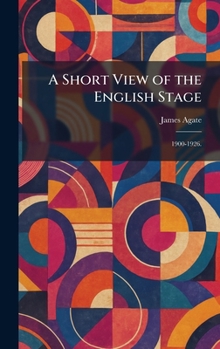
A Short View of the English Stage: 1900-1926.

The text provides a discerning look at the major theatrical movements, influential playwrights, and iconic performances that defined the English stage during this period. Agate's commentary delves into the shifting aesthetic values and social pressures that shaped the repertoire of the early 1900s, offering contemporary readers a window into the development of modern drama. From the rise of realism to the enduring legacy of classical revivals, "A Short View of the English Stage, 1900-1926" serves as an essential record for students of theater history and lovers of the dramatic arts.
This volume is not merely a chronological survey but a critical assessment of the vitality of the English theater. It highlights the significant contributions of actors and directors who elevated the stage to new heights of cultural relevance. For those interested in the rich heritage of British performance, this work remains a seminal resource, providing context and clarity to the golden age of early 20th-century theater.
This work has been selected by scholars as being culturally important, and is part of the knowledge base of civilization as we know it. This work was reproduced from the original artifact, and remains as true to the original work as possible. Therefore, you may see the original copyright references, library stamps (as most of these works have been housed in our most important libraries around the world), and other notations in the work.
This work is in the public domain in the United States of America, and possibly other nations. Within the United States, you may freely copy and distribute this work, as no entity (individual or corporate) has a copyright on the body of the work.
As a reproduction of a historical artifact, this work may contain missing or blurred pages, poor pictures, errant marks, etc. Scholars believe, and we concur, that this work is important enough to be preserved, reproduced, and made generally available to the public. We appreciate your support of the preservation process, and thank you for being an important part of keeping this knowledge alive and relevant.
Customer Reviews
ThriftBooks ® and the ThriftBooks ® logo are registered trademarks of Thrift Books Global, LLC
