


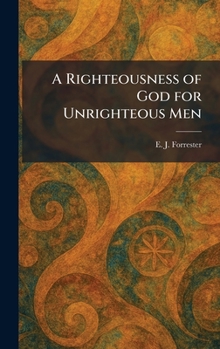
A Righteousness of God for Unrighteous Men

"A Righteousness of God for Unrighteous Men" is a profound theological exploration into the nature of divine justice and the Christian doctrine of justification. Written with both academic rigor and spiritual insight, the work examines the fundamental disconnect between human imperfection and the absolute holiness of God, presenting a compelling argument for the necessity of divine grace. The author navigates complex scriptural themes to illustrate how righteousness is not merely an abstract attribute of the divine, but a transformative gift offered to humanity through faith.
The text serves as a thorough investigation into the biblical foundations of salvation, drawing upon systematic theology to explain the mechanism by which individuals are brought into a right relationship with the Creator. The analysis provides clarity on the intersection of morality, ethics, and theology, making it an essential resource for those seeking to understand historical perspectives on the doctrine of righteousness. This work stands as a testament to early 20th-century religious scholarship, offering enduring insights for theologians, students of divinity, and any reader interested in the profound questions of faith, redemption, and the nature of spiritual reconciliation.
This work has been selected by scholars as being culturally important, and is part of the knowledge base of civilization as we know it. This work was reproduced from the original artifact, and remains as true to the original work as possible. Therefore, you may see the original copyright references, library stamps (as most of these works have been housed in our most important libraries around the world), and other notations in the work.
This work is in the public domain in the United States of America, and possibly other nations. Within the United States, you may freely copy and distribute this work, as no entity (individual or corporate) has a copyright on the body of the work.
As a reproduction of a historical artifact, this work may contain missing or blurred pages, poor pictures, errant marks, etc. Scholars believe, and we concur, that this work is important enough to be preserved, reproduced, and made generally available to the public. We appreciate your support of the preservation process, and thank you for being an important part of keeping this knowledge alive and relevant.
Customer Reviews
ThriftBooks ® and the ThriftBooks ® logo are registered trademarks of Thrift Books Global, LLC
