


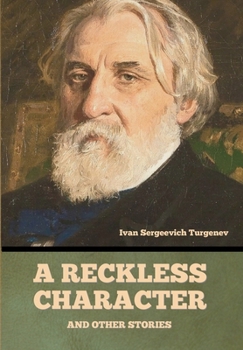
A Reckless Character, and Other Stories

A Reckless Character, and Other Stories is a collection of short fiction by Ivan Sergeevich Turgenev, one of the most important writers of nineteenth-century Russian literature. The stories explore human emotions, social relationships, and the moral struggles of individuals living in a changing society. Through realistic characters and carefully observed settings, Turgenev presents the complexities of love, pride, ambition, and personal failure. His writing is known for its psychological depth and its ability to reveal the inner lives of ordinary people.
A central feature of the collection is its focus on flawed and often impulsive characters. In the title story, the reckless nature of the protagonist leads to conflicts and consequences that affect both himself and those around him. Turgenev avoids simple judgments, instead showing how personality, circumstance, and social expectations shape human behavior. Many of the stories highlight the tension between individual desires and the responsibilities imposed by family, class, and society.
The collection remains significant because of its timeless insight into human nature. Turgenev combines elegant prose with subtle characterization, allowing readers to understand the motivations and weaknesses of his characters. While the stories are rooted in nineteenth-century Russia, their themes of love, regret, self-discovery, and moral choice continue to resonate with modern audiences. As a result, A Reckless Character, and Other Stories serves as both an engaging literary work and a thoughtful exploration of the human condition.
About the Author
Ivan Sergeevich Turgenev (1818-1883) was a major figure in 19th-century Russian literature, known for his refined prose style and insightful portrayals of social change. Born into a wealthy landowning family in Oryol, Turgenev received a privileged education that included studies in Moscow, St. Petersburg, and Berlin. His early exposure to Western European philosophy and literature deeply influenced his worldview, helping shape his later role as a cultural bridge between Russia and Europe.
Turgenev gained prominence with works that explored the tensions within Russian society, especially between generations and ideological movements. His most famous novel, Fathers and Sons (1862), introduced the character Bazarov, often considered one of literature's first nihilists. Through such works, Turgenev examined themes like reform, tradition, love, and the changing social order, often portraying the struggles of individuals caught between old aristocratic values and emerging modern ideas. His writing is noted for its psychological depth, subtle humor, and lyrical depiction of the Russian countryside.
Although celebrated in Russia, Turgenev spent much of his later life abroad, particularly in France and Germany, where he associated with prominent European writers like Gustave Flaubert and Henry James. He played a key role in introducing Russian literature to Western audiences, influencing perceptions of Russian culture across Europe. Despite occasional criticism from Russian contemporaries who found him too Westernized, Turgenev remains a central figure in world literature, admired for his elegance, empathy, and nuanced exploration of human relationships.
Customer Reviews
ThriftBooks ® and the ThriftBooks ® logo are registered trademarks of Thrift Books Global, LLC
