


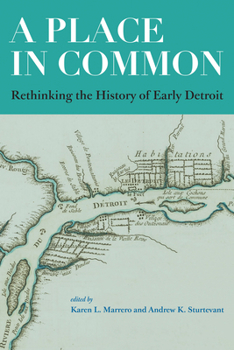
A Place in Common: Rethinking the History of Early Detroit
No Customer Reviews

At the turn of the eighteenth century, Indigenous nations designated Detroit as a "common bowl" and a crucial nexus where they shared resources, made compromises, and coexisted. As the century unfolded, Detroit continued as a polyglot community in the face of expanding Euro-American settlement. The region became a highly charged space where the rituals of political negotiation grew in importance alongside a constant threat of violence. British political and economic systems continued to operate long after the end of the American Revolution, creating a shared cultural border at the end of the eighteenth century that would endure even as the American Empire reestablished rule on the north side of the river. Both Anishinaabe and Wyandot people set aside land for future occupation of their people, re-creating another transnational space in the region. A hundred years later, issues of race, economic development, political partisanship, and overlapping national claims continued to resonate as the city commemorated and mythologized its origins. This book considers how larger watershed occasions impacted the Detroit region and how, in turn, the unique particularities of local custom impacted regional and national trade and politics and the very nature of how the city continues to view its past.
Format:Paperback
Language:English
ISBN:1611865182
ISBN13:9781611865189
Release Date:March 2025
Publisher:Michigan State University Press
Length:254 Pages
Weight:0.75 lbs.
Dimensions:0.7" x 6.0" x 9.0"
Related Subjects
HistoryCustomer Reviews
0 rating
Copyright © 2026 Thriftbooks.com
Terms of Use | Privacy Policy | Do Not Sell/Share My Personal Information | Cookie Policy | Cookie Preferences | Accessibility Statement
ThriftBooks ® and the ThriftBooks ® logo are registered trademarks of Thrift Books Global, LLC
ThriftBooks ® and the ThriftBooks ® logo are registered trademarks of Thrift Books Global, LLC
