


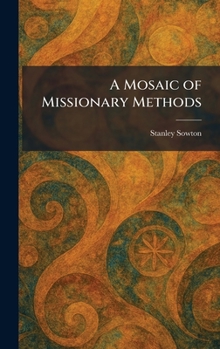
A Mosaic of Missionary Methods

"A Mosaic of Missionary Methods" provides a detailed and systematic exploration of the various strategies and practices employed in Christian missionary outreach during the early twentieth century. Authored by Stanley Sowton, this work serves as an illuminating guide to the diverse approaches used to engage with communities globally, reflecting the evangelical zeal and organizational complexity of the missionary movements of the time.
The book delves into the "mosaic" of efforts that defined the missionary experience, including educational initiatives, medical services, and direct spiritual ministry. By examining these multifaceted methods, Sowton offers readers a comprehensive look at how outreach was adapted to meet the cultural and social needs of different regions. The text highlights the dedication of those involved in these movements and the evolving philosophy of global Christian service.
As a significant historical document, "A Mosaic of Missionary Methods" is an essential resource for those interested in the history of missions, the development of the Methodist tradition, and the broader study of world Christianity. It captures a pivotal moment in the history of international religious movements, providing valuable context for understanding the foundations of early twentieth-century missiology.
This work has been selected by scholars as being culturally important, and is part of the knowledge base of civilization as we know it. This work was reproduced from the original artifact, and remains as true to the original work as possible. Therefore, you may see the original copyright references, library stamps (as most of these works have been housed in our most important libraries around the world), and other notations in the work.
This work is in the public domain in the United States of America, and possibly other nations. Within the United States, you may freely copy and distribute this work, as no entity (individual or corporate) has a copyright on the body of the work.
As a reproduction of a historical artifact, this work may contain missing or blurred pages, poor pictures, errant marks, etc. Scholars believe, and we concur, that this work is important enough to be preserved, reproduced, and made generally available to the public. We appreciate your support of the preservation process, and thank you for being an important part of keeping this knowledge alive and relevant.
Customer Reviews
ThriftBooks ® and the ThriftBooks ® logo are registered trademarks of Thrift Books Global, LLC
