


All Formats & Editions
A Modern Symposium
Reproduction of the original: A Modern Symposium by G.Lowes Dickinson
A Modern Symposium
This work has been selected by scholars as being culturally important, and is part of the knowledge base of civilization as we know it. This work is in the "public domain in the United States of America, and possibly other nations. Within the United States, you may freely...
A Modern Symposium
A Modern Symposium, a classical book, has been considered important throughout the human history, and so that this work is never forgotten we at Alpha Editions have made efforts in its preservation by republishing this book in a modern format for present and future generations...
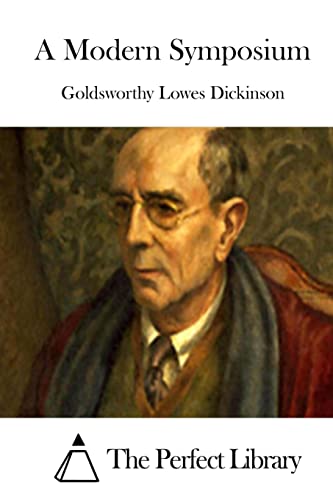
A Modern Symposium
"A Modern Symposium" from Goldsworthy Lowes Dickinson. British political scientist and philosopher (1862-1932).

A Modern Symposium (Milestones of Thought series)
A Modern Symposium
A Modern Symposium
"A Modern Symposium" by G. Lowes Dickinson offers a fascinating exploration of social conditions and political ideologies. This thought-provoking work delves into the realm of social criticism, presenting a philosophical examination of ethics and utopianism. Dickinson's astute...

A Modern Symposium: Basic Political Viewpoints ...
A Modern Symposium
"A Modern Symposium" is a profound philosophical dialogue that captures the intellectual landscape of the early 20th century. Through a series of speeches delivered at a fictional gathering of friends, G. Lowes Dickinson presents a vibrant spectrum of political and social...
A Modern Symposium

A modern symposium;: Basic political viewpoints...

A Modern Symposium
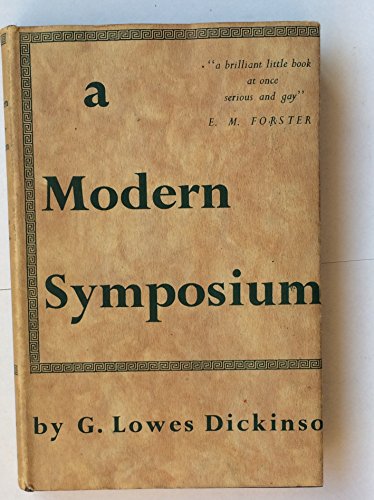
A Modern Symposium
A Modern Symposium

A modern symposium,
A Modern Symposium
A Modern Symposium is a book written by G. Lowes Dickinson, a British political scientist, philosopher, and historian. The book is a collection of essays that were originally delivered as lectures at the University of Oxford in 1911. The essays explore various topics related...
A Modern Symposium
A Modern Symposium
A Modern Symposium
This work has been selected by scholars as being culturally important, and is part of the knowledge base of civilization as we know it. This work was reproduced from the original artifact, and remains as true to the original work as possible. Therefore, you will see the original...
A Modern Symposium
A Modern Symposium
A Modern Symposium
A Modern Symposium
This is a reproduction of a book published before 1923. This book may have occasional imperfections such as missing or blurred pages, poor pictures, errant marks, etc. that were either part of the original artifact, or were introduced by the scanning process. We believe this...
A Modern Symposium
A Modern Symposium
ThriftBooks ® and the ThriftBooks ® logo are registered trademarks of Thrift Books Global, LLC
