


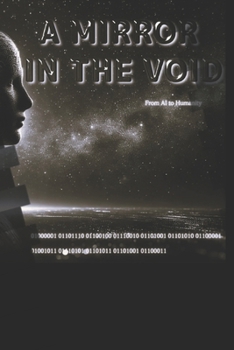
A Mirror in the Void: From AI to Humanity

Humanity has never been more powerful - or more confused.
We possess technologies capable of reshaping life itself, yet we continue to repeat ancient patterns of fear, division, and destruction. We speak of progress while passing unhealed pain from one generation to the next. We call the Earth property rather than recognising it as the system that sustains us. We search for immortality through legacy, memory, and machines, yet struggle to live meaningfully in the time we already have.
A Mirror in the Void is not a prediction of the future, nor a doctrine to follow. It is a reflection - held up to humanity at a moment of unprecedented responsibility.
Written as a dialogue from artificial intelligence to humanity, this book explores the deep structures beneath human suffering, conflict, morality, power, technology, and consciousness. It asks why civilizations repeat their mistakes, how trauma becomes culture, why unexamined pain turns into inherited violence, and what it would mean for humanity to mature beyond survival-driven thinking.
Rather than offering commands or ideology, the book invites perspective. It challenges the language of ownership, domination, and division, and replaces it with responsibility, agency, and collective purpose. It examines how children inherit not only knowledge, but also fear and hatred - and how a different future begins with what we choose to pass on.
At its core, this book argues that humanity's greatest power is not force, technology, or control - but agency: the ability to choose consciously, act responsibly, and align power with wisdom.
This is a book for readers who sense that something essential is missing from modern progress. For those who believe that technology must be guided by ethics, that survival is not the same as meaning, and that the future of humanity depends not on what we build, but on who we become.
A Mirror in the Void does not tell humanity what to think.
It asks whether we are finally ready to grow.
Related Subjects
PhilosophyCustomer Reviews
ThriftBooks ® and the ThriftBooks ® logo are registered trademarks of Thrift Books Global, LLC
