


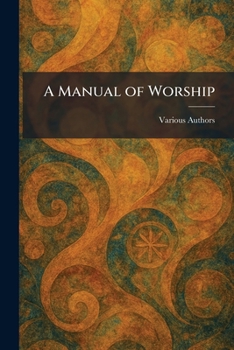
A Manual of Worship

Select Format
Select Condition 
Book Overview
"A Manual Worship" is a comprehensive collection of liturgical resources designed to guide both communal and personal devotional life. Compiled from various sources, this work provides a structured approach to religious services, offering a wealth of prayers, orders of worship, and spiritual reflections that cater to a variety of occasions and spiritual needs.
This manual serves as a practical guide for those seeking to enrich their prayer life and deepen their connection with the divine. By gathering diverse voices and traditions into a single volume, the book offers a multifaceted perspective on the act of worship, emphasizing the importance of ritual, reverence, and tradition in the practice of faith. From formal service structures to quiet moments of individual contemplation, "A Manual Worship" remains a significant historical resource for understanding the liturgical practices and spiritual priorities of the early twentieth century.
Whether used for liturgical planning or private meditation, the collection highlights the timeless nature of spiritual seeking. Its contents provide insight into the language of devotion and the structural elements that define sacred gatherings, making it an essential reference for students of religious history and practitioners of Christian ritual alike.
This work has been selected by scholars as being culturally important, and is part of the knowledge base of civilization as we know it. This work was reproduced from the original artifact, and remains as true to the original work as possible. Therefore, you may see the original copyright references, library stamps (as most of these works have been housed in our most important libraries around the world), and other notations in the work.
This work is in the public domain in the United States of America, and possibly other nations. Within the United States, you may freely copy and distribute this work, as no entity (individual or corporate) has a copyright on the body of the work.
As a reproduction of a historical artifact, this work may contain missing or blurred pages, poor pictures, errant marks, etc. Scholars believe, and we concur, that this work is important enough to be preserved, reproduced, and made generally available to the public. We appreciate your support of the preservation process, and thank you for being an important part of keeping this knowledge alive and relevant.
Customer Reviews
ThriftBooks ® and the ThriftBooks ® logo are registered trademarks of Thrift Books Global, LLC
