


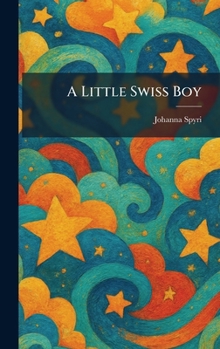
A Little Swiss Boy

Select Format
Select Condition 
Book Overview
"A Little Swiss Boy" is a charming tale of childhood innocence and the majestic beauty of the Alps, penned by the beloved author Johanna Spyri. Set against the breathtaking backdrop of the Swiss mountains, the story follows the adventures and daily life of a young boy as he navigates the challenges and joys of a rustic alpine existence. Spyri, renowned for her world-famous work "Heidi," once again captures the essence of the natural world and the resilient spirit of youth.
The narrative emphasizes themes of kindness, family, and the profound connection between people and their environment. Readers are transported to a simpler time where the rhythm of life is dictated by the seasons and the rugged landscape. Through vivid descriptions and endearing characters, "A Little Swiss Boy" explores the universal experiences of growing up while providing a unique glimpse into traditional Swiss culture. This work remains a poignant example of classic children's literature, celebrated for its emotional depth and its celebration of the simple virtues of honesty and perseverance. It is a timeless story that resonates with readers of all ages who appreciate stories of character and natural beauty.
This work has been selected by scholars as being culturally important, and is part of the knowledge base of civilization as we know it. This work was reproduced from the original artifact, and remains as true to the original work as possible. Therefore, you may see the original copyright references, library stamps (as most of these works have been housed in our most important libraries around the world), and other notations in the work.
This work is in the public domain in the United States of America, and possibly other nations. Within the United States, you may freely copy and distribute this work, as no entity (individual or corporate) has a copyright on the body of the work.
As a reproduction of a historical artifact, this work may contain missing or blurred pages, poor pictures, errant marks, etc. Scholars believe, and we concur, that this work is important enough to be preserved, reproduced, and made generally available to the public. We appreciate your support of the preservation process, and thank you for being an important part of keeping this knowledge alive and relevant.
Customer Reviews
ThriftBooks® and the ThriftBooks® logo are registered trademarks of Thrift Books Global, LLC
