


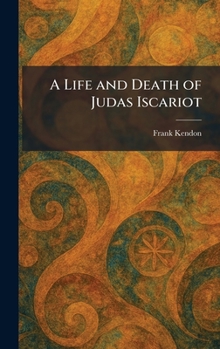
A Life and Death of Judas Iscariot

"A Life and Death of Judas Iscariot" is a compelling literary exploration of one of history's most enigmatic and controversial figures. Written by the poet and author Frank Kendon, this work delves into the psychological and spiritual journey of the apostle who ultimately betrayed Jesus Christ. Through evocative and sensitive writing, the narrative seeks to humanize Judas, examining the motivations, internal conflicts, and tragic circumstances that led to his infamous act in the Garden of Gethsemane.
By retracing the steps of Judas from his early encounters with the Messiah to the final, heavy consequences of his choices, Kendon offers a profound meditation on guilt, redemption, and the complexities of human nature. The work stands as a significant contribution to early 20th-century biblical literature, blending historical imagination with deep theological introspection. Readers interested in New Testament narratives and the literary reimagining of biblical archetypes will find "A Life and Death of Judas Iscariot" to be a haunting and thought-provoking study of a man whose name has become synonymous with treachery.
This work has been selected by scholars as being culturally important, and is part of the knowledge base of civilization as we know it. This work was reproduced from the original artifact, and remains as true to the original work as possible. Therefore, you may see the original copyright references, library stamps (as most of these works have been housed in our most important libraries around the world), and other notations in the work.
This work is in the public domain in the United States of America, and possibly other nations. Within the United States, you may freely copy and distribute this work, as no entity (individual or corporate) has a copyright on the body of the work.
As a reproduction of a historical artifact, this work may contain missing or blurred pages, poor pictures, errant marks, etc. Scholars believe, and we concur, that this work is important enough to be preserved, reproduced, and made generally available to the public. We appreciate your support of the preservation process, and thank you for being an important part of keeping this knowledge alive and relevant.
Customer Reviews
ThriftBooks ® and the ThriftBooks ® logo are registered trademarks of Thrift Books Global, LLC
