


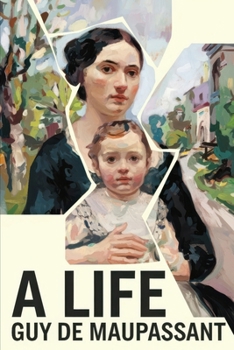
A Life: A New Translation

France, 1819. Jeanne Le Perthuis des Vauds is seventeen years old, newly released from the convent, and full of exquisite dreams about the life ahead of her.
She will be disappointed in all of them.
First published in French in 1883, A Life (Une Vie) is Maupassant's debut novel and one of the enduring masterworks of nineteenth-century European literature. Set against the luminous and melancholy Normandy coast, it traces the arc of one woman's existence across nearly three decades - from the bright morning of romantic hope, through a marriage that slowly empties of everything she believed it would contain, to the long afternoon of loss, financial ruin, and quiet endurance.
Jeanne is not a tragic heroine in any dramatic sense. She is something more unsettling: an ordinary woman, gently raised, who expected life to resemble her dreams and found it stubbornly, consistently, refusing to do so. Her husband proves cold and faithless. Her beloved son grows distant and dissolute. The family estate she cherished must be sold. And yet life continues - as it does - demanding to be lived.
Written under the influence of his mentor Gustave Flaubert and praised by Leo Tolstoy as virtually the best French novel since Les Mis rables, A Life bears all the hallmarks of Maupassant's genius: crystalline prose, a merciless eye for social reality, and an unflinching compassion for the human beings caught within it. It is a novel about disappointment that is itself never disappointing - and a portrait of womanhood in nineteenth-century France that speaks, across all the distance of time and place, with startling immediacy.
"Life is never as good or as bad as one thinks."
Customer Reviews
ThriftBooks ® and the ThriftBooks ® logo are registered trademarks of Thrift Books Global, LLC
