


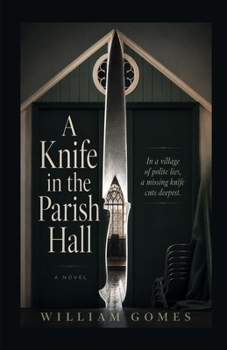
A Knife in the Parish Hall

In a village of polite lies, a missing knife cuts deepest.
June Harker knows the parish hall by heart: the wet coats, the tea urn, the careful agendas, and the polite civic rituals that make decisions look respectable before anyone has truly been heard.
Then, at an ordinary committee meeting, two versions of the agenda appear. A contentious development has been pushed to the end of the evening. An angry brother is made to look unreasonable. A good bread knife has been signed out of the kitchen in an unfamiliar hand. By morning, Clare Ash is dead, and the parish is already learning the story it is meant to tell.
June has spent years making difficult truths sound measured. Now she must decide whether to print the clean version everyone will accept, or follow the records kept by the people no one thinks to ask: the clerk, the treasurer, the caretaker, and the girl on the cash tin.
A Knife in the Parish Hall is a quietly devastating literary mystery about power, grief, civic respectability, and the violence hidden inside ordinary language. Atmospheric, intelligent, and morally sharp, it asks what happens when the official record is not false in detail, but false in shape.
Customer Reviews
ThriftBooks ® and the ThriftBooks ® logo are registered trademarks of Thrift Books Global, LLC
