


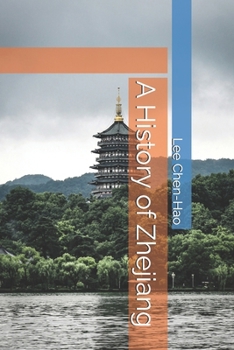
A History of Zhejiang

A History of Zhejiang offers a sweeping journey through one of China's most influential coastal provinces, tracing its story from the rice-growing Neolithic communities of Hemudu and the jade-rich civilization of Liangzhu to its rise as a center of imperial power, maritime exchange, and modern entrepreneurship. Rich in geography, culture, and political drama, the book presents Zhejiang not as a peripheral region, but as a vital force in the making of Chinese civilization.
Across twenty-five chapters, the narrative explores the Kingdom of Yue, the integration of the southeast under Qin and Han rule, the age of Eastern Wu, the impact of migration during the Six Dynasties, and the transformative role of the Grand Canal. Readers encounter legendary rivalries, powerful dynasties, Buddhist and Daoist traditions, elite clans, military upheavals, and the artistic achievements that helped define Zhejiang's identity.
The book gives special attention to Zhejiang's golden eras, including the prosperity of the Tang, the stability of the Wuyue Kingdom, and the dazzling height of the Southern Song, when Hangzhou-then Lin'an-stood among the world's most splendid capitals. It also follows the province through hardship and reinvention, from Mongol rule and Ming coastal conflicts to the Qing conquest, the Opium Wars, the Taiping Rebellion, and the political turbulence of modern China.
Blending political history with archaeology, economics, art, religion, and regional culture, this volume shows how Zhejiang repeatedly adapted to crisis while preserving a distinct spirit of innovation and resilience. From ancient rice paddies and celadon kilns to treaty ports, revolutionary movements, manufacturing hubs, and digital-age Hangzhou, A History of Zhejiang presents a vivid portrait of a province whose past continues to shape China's present and future.
Customer Reviews
ThriftBooks ® and the ThriftBooks ® logo are registered trademarks of Thrift Books Global, LLC
