


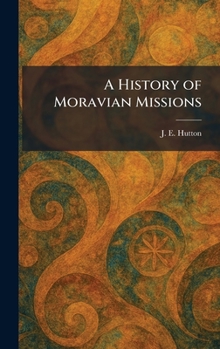
A History of Moravian Missions

"A History of Moravian Missions" provides a comprehensive and detailed account of the missionary activities undertaken by the Moravian Church, also known as the Unitas Fratrum. Written by J. E. Hutton, this work explores the profound impact and global reach of one of the most dedicated missionary movements in Christian history. From the early 18th-century beginnings in Herrnhut to the expansion across the West Indies, North America, Greenland, and Africa, Hutton meticulously documents the challenges and triumphs faced by Moravian pioneers.
The book delves into the spiritual motivations behind the Moravian movement and its unique approach to cross-cultural engagement. It highlights key figures and specific mission stations, offering readers an in-depth look at how this relatively small community managed to establish a significant presence in remote corners of the world. Scholars of church history and those interested in the development of global Christian missions will find this text to be an invaluable resource. Hutton's narrative combines historical rigor with a deep appreciation for the religious fervor that drove these individuals to cross oceans and borders in service of their faith.
This work has been selected by scholars as being culturally important, and is part of the knowledge base of civilization as we know it. This work was reproduced from the original artifact, and remains as true to the original work as possible. Therefore, you may see the original copyright references, library stamps (as most of these works have been housed in our most important libraries around the world), and other notations in the work.
This work is in the public domain in the United States of America, and possibly other nations. Within the United States, you may freely copy and distribute this work, as no entity (individual or corporate) has a copyright on the body of the work.
As a reproduction of a historical artifact, this work may contain missing or blurred pages, poor pictures, errant marks, etc. Scholars believe, and we concur, that this work is important enough to be preserved, reproduced, and made generally available to the public. We appreciate your support of the preservation process, and thank you for being an important part of keeping this knowledge alive and relevant.
Customer Reviews
ThriftBooks ® and the ThriftBooks ® logo are registered trademarks of Thrift Books Global, LLC
